Cape Town Itinerary: What to See and Do in 4 (or More) Days

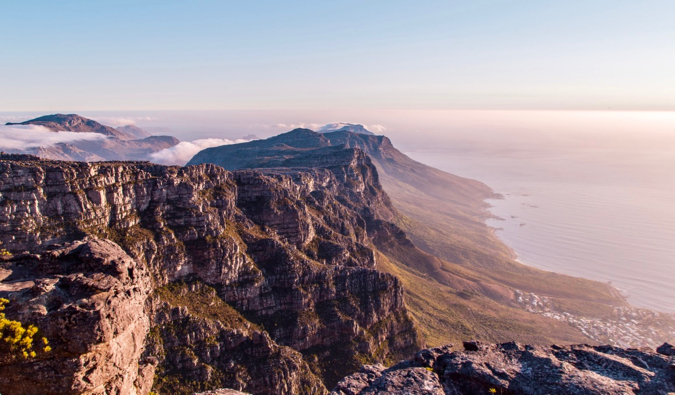
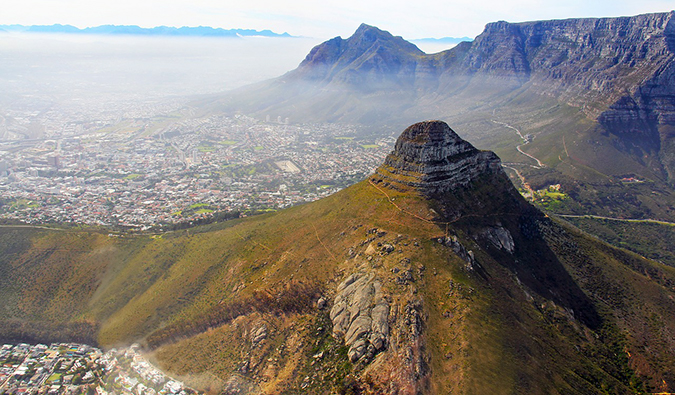
An aerial view of Cape Town from the mountains
Posted: 2/13/2020 | February 13th, 2020

Cape Town is one of those places I can never get enough of. Its natural beauty, climate, people, chill atmosphere, and delicious food scene always make my visits memorable.

Backed by Table Mountain, Cape Town is really one of the most beautiful cityscapes in the world.

There’s a lot to see and do in the city, so to help you make the most of your trip, here is my suggested itinerary for four (or more) days.


Cape Town Itinerary: Day 1

Table Mountain in Cape Town during a colorful sunset
Take a Free Walking Tour
For a thorough introduction to Cape Town, I recommend taking at least one free walking tour. As you know, I always do that when I arrive in a new city, to help me get a sense of the destination’s culture and history and orient myself. Some of my favorite walking tours are:

Just be sure to tip your guide at the end, as that’s how they make their living.

Explore the City Center
Your next stop should be Cape Town’s city center. You’ll find all kinds of shopping, cafés, restaurants, and markets along Long Street. Take several hours to explore and see it all. To see more of Cape Town’s eclectic neighborhoods and get a feel for the local pace of life, here are some specific areas worth exploring:

  • Green Market Square – Right off Long Street, this is a perfect place to find local handicrafts and souvenirs. There are all sorts of crafts and gifts here. Don’t be afraid to haggle for a good deal!
  • Victoria and Alfred’s Waterfront – This is another impressive shopping locale, with a large variety of shops and entertainment. It’s on the historic working harbor, the architecture is quite charming, and it’s extremely popular with both tourists and locals alike. Grab a seat on a waterfront restaurant’s balcony, have a drink, and soak up the atmosphere.
  • Bo-Kaap – Not far from the city center is Bo-Kaap, a colorful Muslim neighborhood. This area, previously the home of Cape Town’s slave population, is known to be quite Instagram friendly (you’ve likely seen it on IG already!). Each home is painted a different color and you can tour the area on your own (although you’ll probably enjoy it a lot more if you take a free walking tour). If you don’t tour with a group, be sure to get a overview of the area’s history at the Bo-Kaap Museum. It’s small, but the staff is quite friendly and super knowledgeable. Admission is 20 ZAR ($1.36 USD) per person.
  • De Waterkant – A nice place to spend the evening is the De Waterkant neighborhood. Not far from Bo-Kaap, this trendy area (think NYC’s Greenwich Village) is the perfect place to stroll, window-shop, and enjoy an upscale dinner. The architecture is quite stylish in what is Cape Town’s “pink” (gay-friendly) district. The Cape Quarter shopping mall is here as well.
  • Woodstock – This is one of the coolest neighborhoods in Cape Town. In recent years, it’s become a hub for art galleries, co-working spaces, breweries, and hip restaurants. What was once an old, rundown industrial area is now one of the coolest places in town.

Visit Table Mountain
A visit to Cape Town isn’t complete without taking in the view from Table Mountain. It’s a bit of a walk up there, but it’s totally worth it. The shortest trail takes about two hours, but if you’re short on time, you can take the cable car, which takes about five minutes each way (it’s a bit pricey at 330 ZAR ($22 USD) for a round-trip ticket, though). Up top, you’ll have a 360-degree view of Cape Town, the harbor, the mountains, and the beaches. Try to come up during sunset, or if you can, bring some food and drink and have a picnic!

Keep in mind that the clouds can move in really fast here, so be sure to check the weather before you hike up.

I suggest hiking up and then taking the cable car down if you’re short on time. If you want to extend your stay, hike both ways and spend some time relaxing and taking in the view. If you pack some water and snacks, you can easily make this a full-day activity. There are shops at the summit as well as several other hiking trails to explore if you’re looking to work up a sweat.

Note: I put this at the end of the day so you can do the walking tours in the morning, but you can also make this a full-day activity if you want! It’s worth taking it slow here if you have the time.
 

Cape Town Itinerary: Day 2
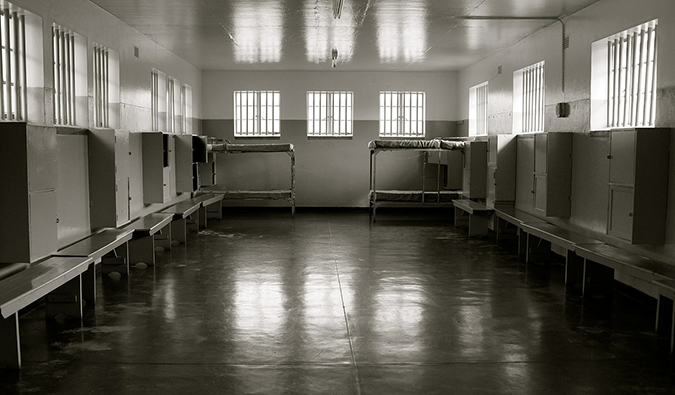
black and white photograph of the jail where Nelson Mandela was kept
Visit Robben Island
Hop on a ferry from the Victoria and Alfred Waterfront and head to Robben Island, located about 8km from shore, where Nelson Mandela was imprisoned for 18 of his 27 years behind bars. Declared a UNESCO Heritage Site in 1999, the museum is an important symbol in South Africa, representing the triumph of democracy over apartheid. The tour guides are former prison inmates, and you can to sit in the cells where the political prisoners once lived.

No visit to Cape Town is complete without coming here. Do not skip this!

Ferries operate three times a day, starting at 9am (a fourth ferry operates during the summer season). Admission is 320 ZAR ($22 USD) for adults and 200 ZAR ($13.50 USD) for anyone under 18, which includes the ferry ride. Expect the entire trip to take at least four hours.

Visit Kirstenbosch Garden
Located in the southern suburbs, these gardens were established over 300 years ago and have more than 22,000 types of plants found on the African continent. Spanning over 1,300 acres, this is unlike any other botanical garden you’ve seen! Be sure to do the tree canopy walkway. There are restaurants and cafés on-site, but they are expensive, so I’d bring your own food and have a picnic on the grounds.

Rhodes Drive, Newlands, +27 0800-434-373, sanbi.org/gardens/Kirstenbosch. Open daily 8am-6pm (7pm in the summer). Admission is 70 ZAR ($5 USD) per person (discounts available for students and children).

Watch the Sunset from Lion’s Head
Table Mountain’s little sister, Lion’s Head, is perfect for an evening hike. It takes just 45 minutes to hike to the top, so time your trek so you’re at the peak for sunset. It’s one of the most scenic spots in town. Also, remember a flashlight for the trek back down.
 

Cape Town Itinerary: Day 3
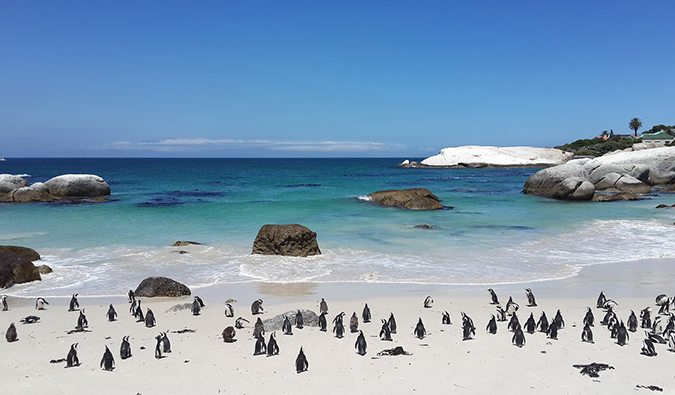
penguins at Boulders Beach, just outside of Cape Town
See the Penguins
While you’re in Cape Town, you won’t want to pass up seeing the area’s cutest inhabitants: African penguins! This colony is home to over 3,000 penguins. They live at Boulders Beach Park, and you can view them from a raised boardwalk (further down the beach you can swim with them if you’re really bold — expect freezing water!). Just keep in mind that they are wild animals. The beach is their home, not yours — so keep your distance and don’t try to feed or pet them. They are wild animals after all.

Visit Slave Lodge
Built in 1679, this is one of the oldest remaining buildings in Cape Town. It is where the Dutch East India Company housed their slaves until 1811. Over 60,000 African and Asian slaves were brought to the city, and almost 300 men and women were forced to reside in the lodge at a time. Today, the lodge is a museum where you can learn about the hardships slaves faced in their daily lives in Cape Town.

Corner of Adderley Street and Wale St, +27 2- 467-7229, slavery.iziko.org.za/slavelodge.

Tour Parliament
Take a tour of the parliament of South Africa and learn about South African politics — including how the country was governed during the apartheid era. Dating back to 1884, the Houses of Parliament are National Heritage Sites; the original building was granted approval by Queen Victoria when Cape Town was a British colony.

Today, they host daily hour-long tours during the week, and you can even book a spot (at least one week in advance) to watch debates if you’re interested.

120 Plein St, +27 (021) 403 2266, parliament.gov.za/visiting-parliament. Tours are held daily, but advance booking is required. Admission is free.

Hike Signal Hill
For some beautiful sunset views, hike up to the top of Signal Hill. The climb is tiring and takes around 90 minutes, but the views are worth it (you can also drive or take a taxi up to the top). You’ll get a sweeping vista of Cape Town, including a view overlooking Table Mountain too. Just be sure to give yourself lots of time, so that you don’t miss the sunset.
 

Cape Town Itinerary: Day 4
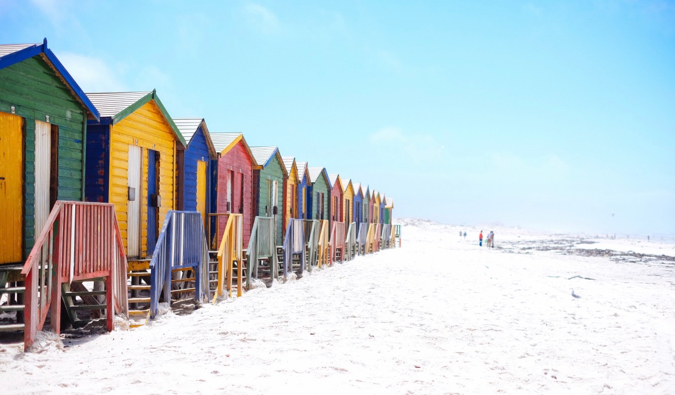
The famous Muizenberg Beach in South Africa
Visit the District Six Museum
In 1867, District Six was established for freed slaves, immigrants, and marginalized individuals. Under apartheid (1948–1994), the district was declared a “white area” and the existing residents were forced out. Over 60,000 people were forced from their homes, and this museum highlights their struggles and stories. It provides important context to the city’s modern history and ongoing struggles.

25A Albertus St, +27 21-466-7200, districtsix.co.za. Open Monday-Saturday 9am-4pm. Admission is 45 ZAR ($3 USD) or 60 ZAR ($4 USD) for a guided tour.

Hit the Beach
Cape Town has some incredible beaches, so make sure you spend at least part of a day on one of them. Clifton Beach is probably the most popular. The sand is super white and the water a bright blue. Unfortunately, it’s cold pretty much year-round, so don’t expect warm tropical waters. The scenery is gorgeous though, with the mountains behind you and mansions and upscale restaurants lining the beach road.

Another option is Muizenberg Beach, which is a 30-minute drive from the city center. This beach has a famous boardwalk and is great for surfing.

Check Out the Wildlife
If you head down Muizenberg Beach, be sure to stop at Hout Bay. This harbor is home to tons of seals and seabirds. If you’re visiting between June and November, keep your eyes peeled for the migrating whales. Right whales, humpback whales, Bryde’s whales, and dolphins can all be found here.

If you’re looking for a meal, the fish and chips in this area of town are to die for. And don’t miss the Bay Harbour Market on the weekend: vendors sell everything from fresh fish to jewelry to local art, and there are often live bands too.

Explore the South African National Gallery
The Iziko South African National Gallery is home to an extensive collection of both South African and African art, as well as English, Dutch, and French pieces. The collection focuses on works from the 17th to 19th centuries, including paintings, sculptures, sketches, and lithographs.

They also facilitate an ever-changing rotation of contemporary artwork from both locals, as well as visiting exhibitions from across Africa and around the world (visit the website to see what temporary exhibitions are available during your visit).

Additionally, the gallery has a lot of insightful information about art and censorship during apartheid.

Government Ave, +27 21 481 3970, iziko.org.za. Open daily 9am-5pm. Admission is 30 ZAR ($2 USD).
 

Cape Town Itinerary: Day 5 (or More!)
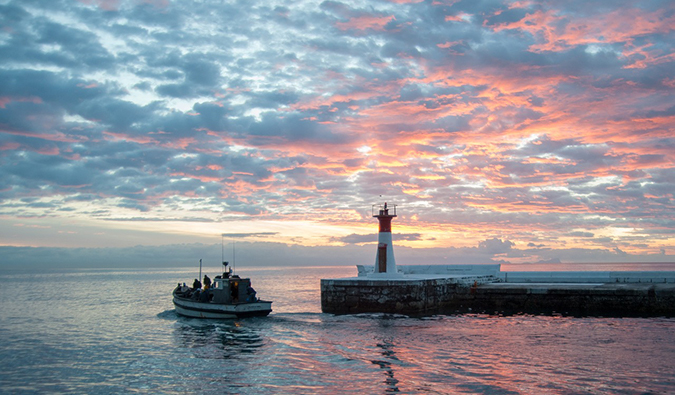
a fishing boat in Kalk Bay at sunset, South Africa
If you have more than four days in Cape Town, here are some other fun things to see and do during your trip. Most of these will take you out of the city, so you can see more of this beautiful region of the country. Consider renting a car to make things easier!

Visit Kalk Bay
This fishing village makes for a nice spot to go window-shopping (or actual shopping if you want some souvenirs). There are plenty of seaside cafés you can relax in for a few hours, away from the busy city center.

Journey to the Cape of Good Hope
The Cape of Good Hope is where the Atlantic and Indian Oceans meet, and the drive there from Cape Town is one of the best on the continent. You’ll want to take the route along Chapman’s Peak, a winding and scenic road along the Atlantic coast. It’s a toll road, but the views are very much worth the price.

The Cape of Good Hope is located in Table Mountain National Park, which stretches all the way from Table Mountain in Cape Town to the tip of the continent. This nature reserve is home to numerous birds and animals, including antelope, Cape mountain zebra, eland, and baboons. Keep in mind that, while the baboons may look cute, they are still wild animals, so be careful around them and keep your food secured and out of sight.

There is a lot to see, so plan for a full-day excursion. If you don’t have your own car, you can book a tour with the Cape Point Explorer for 740 ZAR ($50 USD).

Enjoy Some Wine
If you love wine, head to the Stellenbosch area. If you have a car, it’s just 45 minutes outside of the city and is home to hundreds of vineyards. The wine from this region is world-famous, and the scenery is breathtaking, offering towering mountains and lush valleys. Tastings typically run about 60-75 ZAR ($4-5 USD), and food pairings are available as well. Some suggested wineries to check out are:

  • Spier Wine Farm (one of the oldest in the region)
  • Marianne Wine Estate (offers a classic French winery experience)
  • Waterford Wine Estate (they pair their wines with decadent local chocolates)

If you don’t have a vehicle and want to take a tour, expect to pay at around 1,000 ZAR ($68 USD) per person for a half-day tour of the region and its wineries. Many hostels run their own tours to the region or have partnerships with local tour guides who can take you as well. Be sure to shop around!

Learn to Surf
Cape Town is a super place to learn how to surf (though it’s also terrific for experienced surfers). Surfer’s Corner at Muizenberg Beach is known for its beginner waves, and there are plenty of surfing schools around where you can rent a board and take lessons. Expect to pay around 500 ZAR ($34 USD) per person for a 2-3-hour lesson.

***

Cape Town is one of my favorite cities on the African continent. With its terrific hikes, beautiful scenery, and important history, Cape Town has something for everyone. And, thanks the rand’s value, it’s affordable enough, so it’s easy to visit without breaking the bank.

Let this Cape Town itinerary help you make the most of your visit there.

Map of Activities

P.S. – Want to meet other travelers in real life? This year we launched The Nomadic Network, a platform created to help travelers connect, learn, and get inspired in real life! Here are our upcoming events if you want to take part: Seattle (2/17), Austin (2/18), Fort Lauderdale (2/19), Portland (2/19), San Francisco (2/20), Los Angeles (2/23), Detroit (2/24), Boston (2/24), Dublin (2/24), San Diego (2/24), London (2/25), Chicago (2/25), and NYC (3/10).

Book Your Trip to Cape Town: Logistical Tips and Tricks

Book Your Flight
Find a cheap flight by using Skyscanner or Momondo. They are my two favorite search engines, because they search websites and airlines around the globe, so you always know no stone is being left unturned.

Book Your Accommodation
You can book your hostel with Hostelworld as they have the most comprehensive inventory. If you want to stay somewhere else, use Booking.com, as they consistently return the cheapest rates for guesthouses and hotels. My favorite places to stay in Cape Town are:

  • The Backpack Cape Town – A fair-trade hostel with a swimming pool and garden, as well as activities most nights. They do a lot of good work for social change!
  • Ashanti Lodge Gardens – You can hang out at the pool or the landscaped gardens here, or in the awesome Kumasi Bar, with its views of Table Mountain. They have a great bar menu too!
  • 91 Loop – When you stay here, you get a free breakfast, free city walking tours, the opportunity to take part in organized activities, and discounts on the Honey Badger restobar.

Don’t Forget Travel Insurance
Travel insurance will protect you against illness, injury, theft, and cancellations. It’s comprehensive protection in case anything goes wrong. I never go on a trip without it, as I’ve had to use it many times in the past. I’ve been using World Nomads for ten years. My favorite companies that offer the best service and value are:

Looking for the best companies to save money with?
Check out my resource page for the best companies to use when you travel! I list all those I use to save money — and I think they will help you too!

Looking for more travel tips for South Africa?
Check out my in-depth South Africa travel guide for more ways to save money, tips on what to see and do, suggested itineraries, informational reading, packing lists, and much, much more!

The post Cape Town Itinerary: What to See and Do in 4 (or More) Days appeared first on Nomadic Matt's Travel Site.
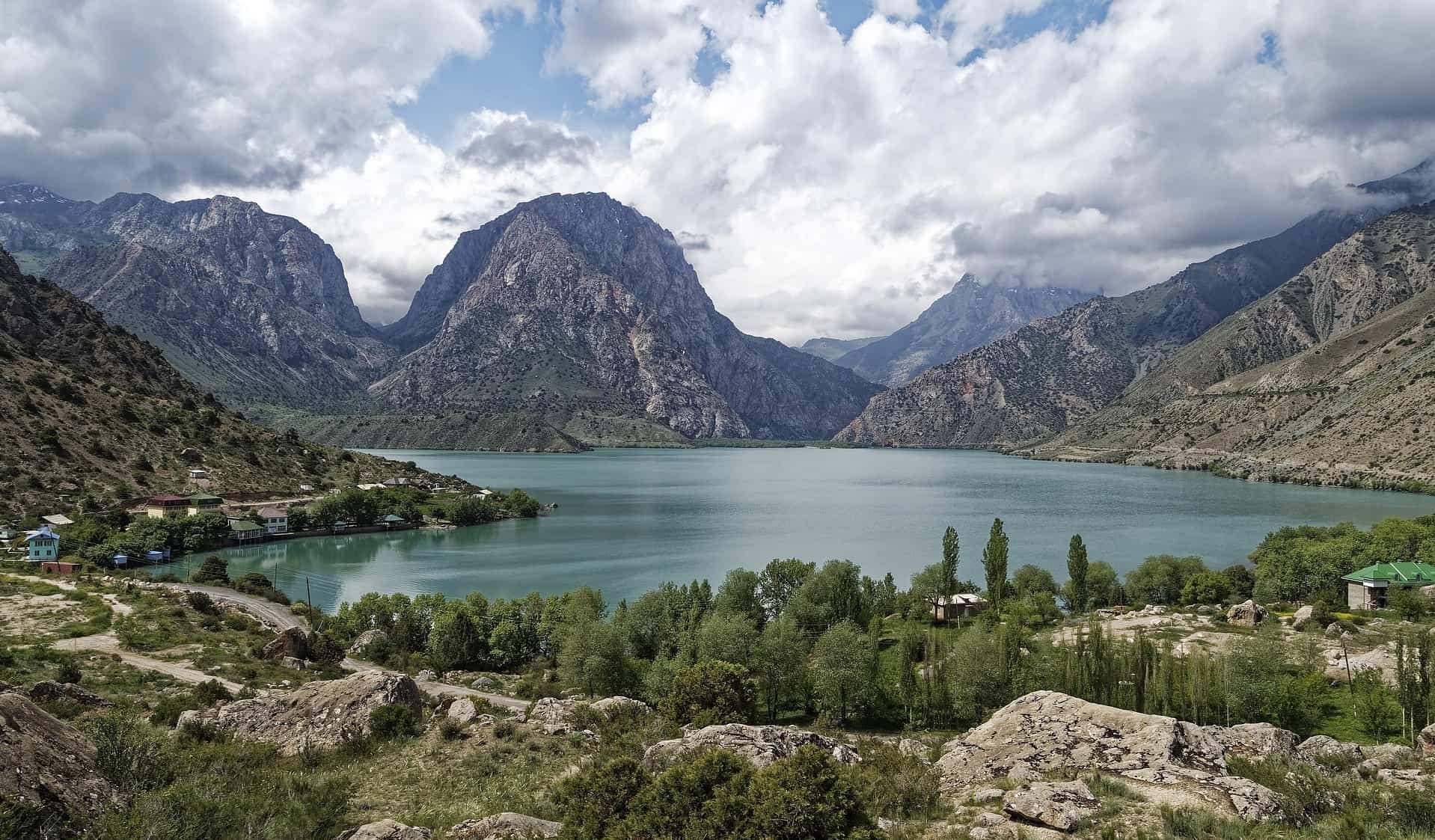
How to Explore Tajikistan on a Budget

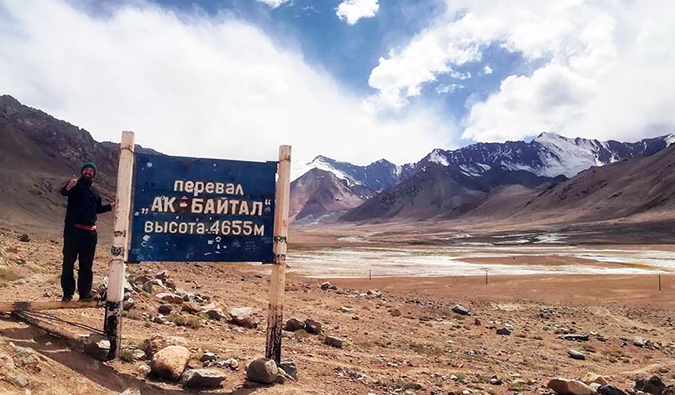
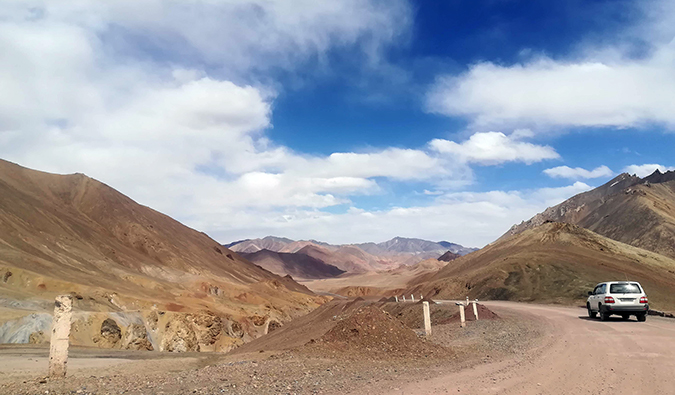
Mountains of Tajikistan
Posted: 02/10/20 | February 10th, 2020

This year, I’m going to try to visit Central Asia in the fall. I’ve never been to the region and it’s long one that’s held great appeal to me. It seems raw, beautiful, and unspoiled. So, when someone reached out to write a guest post on a country there, I was excited. It was a chance to learn a little before I (hopefully) go. In this guest post, traveler and writer Paul McDougal breaks down what it’s like to travel Tajikistan on a budget.

Aptly and romantically known as “The Roof of the World,” Tajikistan is a hikers’ paradise. More than 93% of the country is defined as mountainous — and more than 50% of that sits at over 3,000 meters (9,800 feet)! It’s a striking country, full of glacial peaks and mountain lakes that are best for multiday hikes (but equally astounding on short jaunts too).

Traveling around Tajikistan requires a sense of adventure, as the nation is also dotted with poor-quality roads, rudimentary facilities, and a massive lack of infrastructure. But, after spending almost a month there, I learned that it’s easy and affordable to get around these problems with a smile and a shrug.

Many tourists spend more money than necessary when in Tajikistan. Most do so on an organized tour, which is why there’s a prevailing — and inaccurate — idea that it’s expensive to visit the country. A ten-day organized tour booked online can cost anywhere from $1,500 to $3,500 USD, equivalent to a hefty $150-350 a day.

But if you travel independently, you can easily navigate this country for about $45 USD per day.

So, how do you see Tajikistan on a budget? Here’s how:

Transportation

road tripping in Tajikistan
Instead of booking a tour through an online agent, you have four much more affordable ways to get around to choose from:

1. Find a multiday driver when you arrive
Hostels and guesthouses can put you in contact with local drivers, with whom you can negotiate your own rate, itinerary, and trip length. Typically, travelers spend $50-100 per day per person for this. The better your negotiation skills (and the more stubborn you are), the greater the chance you’ll get a driver for closer to $50 a day.

Drivers can be found in Murghab, Khorog, Dushanbe, and other larger places. If you’re traveling the Pamir Highway (like pretty much everyone else in Tajikistan), you can also find drivers in Kyrgyzstan’s second-biggest city, Osh.

2. Hire a 4WD yourself
This typically costs around $100 per day for the vehicle, so if you’re traveling with a few people, this is a great choice. It gives you freedom and it’s good for your budget!

It’s very easy to organize this upon arrival. All hotels, hostels, and guesthouses in both Osh and Dushanbe can put you into contact with agencies that can arrange 4WD rentals. Don’t arrange this online, unless you want to spend more money.

3. Public transport
Long-distance public transport doesn’t really exist in Tajikistan. However, enterprising locals have filled this gap in a very affordable way. Every day, before they travel from one city or town to another to go about their daily business, they always ensure that every single spot in their vehicle is filled.

To find these travel opportunities, ask your guesthouse where “the bus station” is. They’ll direct you to a car-crammed area (usually near a market) where there will be drivers waiting to fill their cars. Using this method, it’s not unusual to end up squashed into the back of an ancient car with four other people on a five-hour trip. These trips typically only costs around $10. And it’s a great way to immerse yourself in local life.

The price of the trip depends upon its length. The most I paid was for any single trip was $35 USD for a 12-hour, 600-mile voyage from Khorog to Dushanbe. And that was in a 4WD.

A quick side note: If you’re traveling within a city or town, there are many small minibuses (marshrutkas) that can take you from one destination to another along prescribed routes for the measly price of around $0.20 USD. But along those routes, they’ll stop anywhere to take on new passengers and drop off others. And I mean anywhere: houses, outdoor markets, the middle of busy roads — it’s all fair game.

4. Hitchhiking
For the vast majority of my trips in Tajikistan, I hitchhiked. Local people hitchhike in Tajikistan every single day — it’s a valid, recognized method of transport here as not every has a car and, as mentioned above, public transportation is scarce.

When you hitchhike in Tajikistan, don’t stick out your thumb. Keep your stretched-out hand parallel to the ground and wave it up and down. Depending on where you’re hitchhiking, you will probably have to wait a while — on some barren stretches of road, you might wait thirty minutes to see one car. But, if that car has an empty spot, it will stop and take you without fail. (You might have to pay a little money.)

I experienced nothing but positivity and warmth doing this. People were happy to take me and introduced me to all sorts of Tajik food, drinks, and music. It’s not unusual for those who pick you up to offer you snacks, buy you a meal, or take you to their home. I always offered money in return for these treats, but it was never accepted.

Accommodation

road tripping in Tajikistan
1. Guesthouses
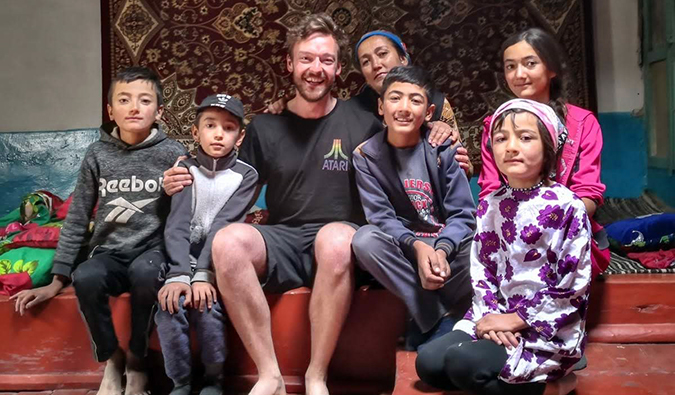
In any town or city, you’ll see houses with the word “guesthouse” written on them. Go inside one and strike a deal. It’s the easiest and most affordable accommodation, the perfect way to save money and have a better experience. You’ll be given great food and an even greater welcome.

Throughout Tajikistan, local people will let you stay in their home for around $10-15 a night. This usually will cover breakfast and dinner too. You can negotiate lunch for a little more if you like — or you can eat elsewhere. Most guesthouses offer much the same welcome and much the same food, so it doesn’t really matter which you choose.

Often, if you’re in a car with Tajiks (whether through hitchhiking or other means), they’ll take you a guesthouse they know of. And it’ll usually be a good one so don’t be too worried about scams.

And even if you can’t find an official guesthouse, you’ll find a friendly local who’ll let you stay at their home for a small price.

2. Hotels and hostels
These can be equally budget-friendly if you choose the right places. Some hotels are very expensive, but spots such as Pamir Hotel in Murghab offer affordable stays starting at around $15 USD a night. Some smaller towns such as Jelondy, a popular hot spring spot for locals, also offer hotel stays for around $10 USD. (Generally speaking, if a town is a popular vacation spot for Tajiks, there will be a cheap hotel.)

Hostels are a good cheap option in bigger towns and cities, and especially in Dushanbe. Green House Hostel in particular is a fantastic, affordable hub and is packed with travelers. It’s an excellent place to team up with others to save on transport costs.

3. Camping
Your third option for accommodation is camping. In some ways, Tajikistan is very camper friendly. I’m not sure what the actual laws are on wild camping, but I’d be very surprised if any exist. Although I didn’t do so myself, I met many people who camped in the wild, and none of them encountered any trouble. You should, of course, follow the normal rules of wild camping: don’t camp in the same place for more than one night, don’t camp on private land without permission, and don’t camp in cities. You should also research whether there are any dangers in the particular area you’re keen to camp. But otherwise, you will not draw any attention, since camping is very well tolerated here.

Moreover, guesthouses and hotels will often let you pitch your tent on their land for only $2 or $3 USD.

Note: the harsh weather conditions can often make camping an unpleasant experience. Because much of Tajikistan lies at such a high elevation, the temperatures can be unpleasant and even dangerous — and the ground in some conditions can be too tough to push tent pegs into. So you should be careful when planning where you want to camp.

Food

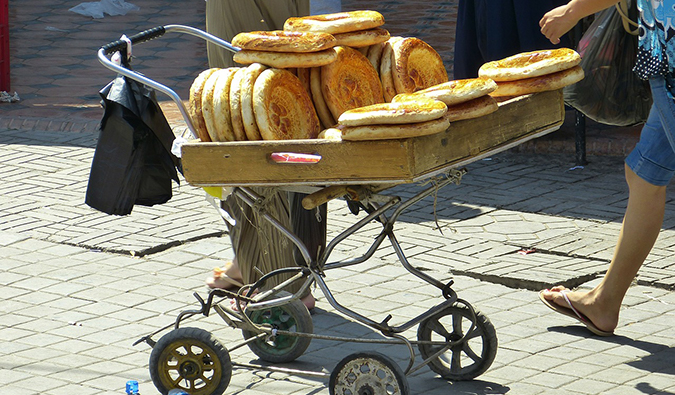
flatbread in Tajikistan /><br />
As I’ve mentioned, you’ll likely eat most of your meals in guesthouses. These will often consist of flat bread, salad, soup, and endlessly flowing cups of tea. Other popular edible offerings include plov (a pilaf-style rice dish with meat and vegetables) and manti (steamed lamb dumplings).</p>
<p>Outside of guesthouses, you’ll find a more varied and versatile selection of food, such as kebabs and fried noodles. </p>
<p>You can get your mouth around all of these morsels for low prices in local cafeterias. The food is tasty and filling, and it comes in big portions for less than $2 USD. If you eat at a more up-market restaurant, you’ll be paying closer to $5 USD.</p>
<p>Takeaway stands in bigger towns and cities sell kebabs and samsas (which are similar to Indian samosas) often for around $1 USD, while outdoor markets are an excellent place to buy fresh fruit and vegetables — along with special pickles, candies, and more — for very cheap prices.</p>
<p><strong>A quick tip on food:</strong> bring hand sanitizer and toilet paper! <a href=Everyone gets sick in Tajikistan. I have the world’s strongest stomach, and even I got sick on three separate occasions. You should also wash your hands as much as possible and avoid putting them into your mouth after handling money. And don’t drink the tap water!

Hiking

hiking in Tajikistan /><br />
If you hire a private guide from an agency, it can be expensive. Some people pay up to $100 USD a day for a hiking guide. But there’s no need to do this.</p>
<p>Instead, simply ask at your guesthouse for a local hiking guide. The people who live in these towns and villages know the areas extremely well. They know all the paths and passes and landscapes.</p>
<p>And for only a few dollars, these unofficial guides will take you to and through the mountains for as long as you like. Whether you want a day hike or a multiday expedition, there’ll be someone in the village who can take you there. I hiked for an entire day in Bulunkul for less than $10 USD and went on a two-day hike in Darshai for less than $25 USD per day.</p>
<p>There are very few marked routes in Tajikistan. Some are marked on maps.me, but there’s very little of the infrastructure that you’ll find in other countries. So while you can hike independently, it’s essential you take a good map, a good compass, and good equipment — and that you know what you’re doing! Make sure you carry a refillable water bottle along with water purification tables — this will save you money too.</p>
<p><strong>Are there any other things to see in Tajikistan?</strong><br />
Pretty much everyone who travels to Tajikistan does so for the hiking and mountain scenery, so I wouldn’t recommend going all the way there if your interest isn’t piqued by peaks. That said, there are a small number of other things to do:</p>
<ul>
<li><strong>Museums:</strong> Dushanbe has a few small museums. The three most notable are the National Museum, the Museum of Antiquities, and the Museum of Musical Instruments. These cost between $1 and $5 USD, so they’re a good idea if you’re looking for something to pass the time inexpensively. Other small towns and cities have small local-interest museums.</li>
<li><strong>Rudaki Park:</strong> Central Asian cities are awash with beautiful parks. And Rudaki Park is one of the best. It’s a great way to people-watch, and it’s beautifully lit after sunset. But best of all, it’s free!</li>
<li><strong>Outdoor Markets:</strong> There are food markets everywhere, which make for another great free activity.</li>
<li><strong>Walking tours:</strong> Some hostels offer walking tours, which can be a nice way to see the city. These are usually pay-what-you-like, so you don’t have to spend much money.</li>
</ul>
<h3>Frequently Asked Questions about Tajikistan</h3>
<p><img src=here and follow his Instagram here for photography and scenes from the road.

Book Your Trip: Logistical Tips and Tricks

Book Your Flight
Find a cheap flight by using Skyscanner or Momondo. They are my two favorite search engines because they search websites and airlines around the globe so you always know no stone is left unturned.

Book Your Accommodation
You can book your hostel with Hostelworld as they have the largest inventory. If you want to stay somewhere other than a hostel, use Booking.com as they consistently return the cheapest rates for guesthouses and cheap hotels.

Don’t Forget Travel Insurance
Travel insurance will protect you against illness, injury, theft, and cancellations. It’s comprehensive protection in case anything goes wrong. I never go on a trip without it as I’ve had to use it many times in the past. I’ve been using World Nomads for ten years. My favorite companies that offer the best service and value are:

Looking for the best companies to save money with?
Check out my resource page for the best companies to use when you travel! I list all the ones I use to save money when I travel – and that will save you time and money too!

The post How to Explore Tajikistan on a Budget appeared first on Nomadic Matt's Travel Site.
My 5 Favorite Hostels in Mexico City

One of the many beautiful historic buildings in Mexico City
Posted: 2/8/2020 | February 8th, 2020

Over the past several years, Mexico City has become a hot spot for travelers as cheap flights and a burgeoning food scene have made this an ideal destination for travelers who wish to discover its temples, museums, and restaurants while sticking to a budget.

As such, the choices of hostels have exploded — there are now over 40. They’ve become a lot more luxurious and offer better accommodations than before.

But they are still cheap!

Beds generally cost 229-379 MXN ($12-20 USD) per night. Plus, you’ll find that many hostels offer tours, free breakfast, and common areas for meeting other travelers.

To help you decide which amazing hostel to stay at in Mexico City, here is a list of my five favorites!
 

1. Casa Pepe

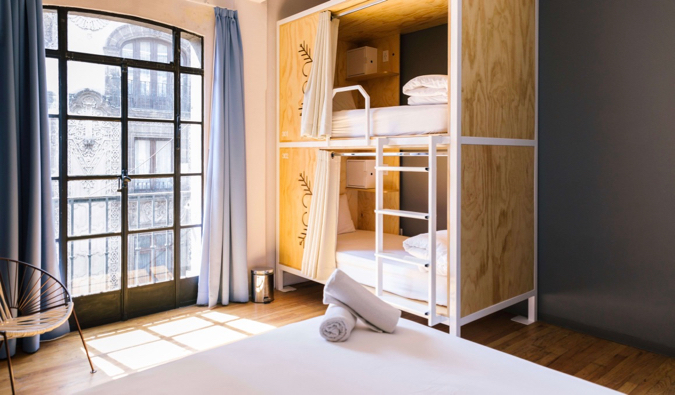
One of the beautiful dorm rooms at the Casa Pepe hostel in Mexico City
Hands-down the best hostels in the city, Casa Pepe is equal parts cultural hub and boutique hostel. It offers a plethora of activities for travelers like in-house concerts, wrestling trips, tequila tastings, traditional dishes for breakfast, and free daily walking tours in different areas of town too.

The rooms are clean and spacious and come with private lockers. The dorm beds are cubby-like and covered by a curtain, so you can have your own private space, which makes sleeping a lot easier. They also come with their own light and USB charger port. You can enjoy yoga in the morning and relax on the rooftop terrace in the evening (there’s a rooftop swimming pool too!).

If you’re looking for a social hostel that makes it easy to meet people, this is it! It’s also located in a great part of the historic center of the city, near the Metropolitan Cathedral and the Zócalo.

Beds from 379 MXN ($20 USD), privates from 1,619 MXN ($86 USD).

—> Book your stay at Casa Pepe!
 

2. Massiosare El Hostel

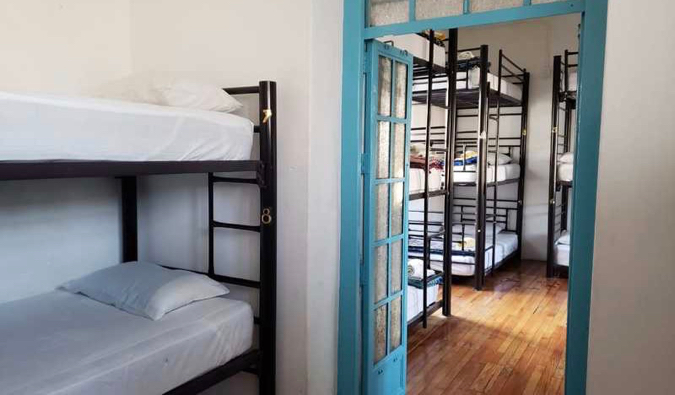
Bunk beds in the Massiosare El Hostel in Mexico City
Towering over Mexico City, Massiosare El Hostel is located in the penthouse of a beautiful historic building. There’s no elevator up to the hostel (which is on the 4th floor), though, which can be tiring, but it more than compensates with cozy dorm rooms and a super chill rooftop. The views from the roof are incredible, and it’s a fun place to relax at night and listen to music with other travelers.

There are two kitchens (one for vegetarians and one for meat eaters) as well as a free breakfast every morning as well. It’s another great social hostel, and it’s super easy to meet people here. Just make sure to bring earplugs since it’s an old building and sounds tend to carry.

Beds from 240 MXN ($12 USD), privates from 600 MXN ($31 USD).

—> Book your stay at Massiosare El Hostel!
 

3. Hostel Home

one of the dorm rooms in Hostel Home, Mexico City
Hostel Home is Mexico City’s first hostel. Located in the Roma district, this place feels is super homey. It’s small, with colorful paintings on the walls and tons of potted plants, and offers comfortable beds, free drinking water, and good Wi-Fi.

The rooms are a little cramped, but each dorm bed has its own locker and power socket, and there’s a large common area in which to socialize in. There’s a kitchen to cook and fresh fruit and eggs are provided at breakfast. The staff are also super helpful and can provide information about the surrounding area and things to do nearby. If you want a more “old school” hostel feel, this place is it.

Beds from 300 MXN ($15 USD), privates from 747 MXN ($39 USD).

—> Book your stay at Hostel Home!
 

4. Suites DF Hostel

the dorm room of the Suites DF Hostel in Mexico City
Suites DF Hostel is located in the hustle and bustle of downtown near tons of bars, restaurants, and cafés — although it’s still a bit quieter than other hostels so if you want to avoid a party hostel, stay here.

Overall, the rooms are clean and simple, and the bedsheets have bright, funky designs that brighten up the place. All the dorms have en suite bathrooms, and there is a personal light and power socket for each bed. There are multiple common rooms to hang out in, a cool terrace for relaxing, and free breakfast every morning.

The hostel also offers a lot of awesome tours to see the sights and meet other people. They also arrange trips to the Teotihuacán Pyramids, the Xochimilco Canals, and lucha libre wrestling matches.

Beds from 324 MXN ($17 USD), privates from 857 MXN ($45 USD).

—> Book your stay at Suites DF Hostel!
 

5. Hostel Amigo Suites Downtown

the terrace of the Amigo Suites Inn in Mexico City
This hostel is the place to party. The rooftop terrace and bar go until 5:00 in the morning! After spending your night partying, you can soak in the sunshine in the solarium or swing on one of the hammocks.

Dorm rooms are small (only 3 or 4 beds per room). You’ll get towels, a personal locker, and an en suite bathroom. The private rooms are pretty spacious, though, with either a double bed or two single beds. There’s also a delicious free vegetarian buffet breakfast and dinner.

Beds from 229 MXN ($12 USD), privates from 650 MXN ($35 USD).

—> Book your stay at Hostel Amigo Suites Downtown!

***

Mexico City and the hostel scene here is fast becoming one of the best in the region. Whether you’re looking for a quiet place to stay or want to party the nights away, Mexico City will have a hostel for you. The prices are incredibly reasonable too, making it an affordable destination for backpackers and budget travelers alike.

Book Your Trip to Mexico City: Logistical Tips and Tricks

Book Your Flight
Find a cheap flight by using Skyscanner or Momondo. They are my two favorite search engines because they search websites and airlines around the globe so you always know no stone is left unturned.

Book Your Accommodation
You can book your hostel with Hostelworld as they have the largest inventory. If you want to stay elsewhere, use Booking.com as they consistently return the cheapest rates for guesthouses and cheap hotels.

Don’t Forget Travel Insurance
Travel insurance will protect you against illness, injury, theft, and cancellations. It’s comprehensive protection in case anything goes wrong. I never go on a trip without it as I’ve had to use it many times in the past. I’ve been using World Nomads for ten years. My favorite companies that offer the best service and value are:

Looking for the best companies to save money with?
Check out my resource page for the best companies to use when you travel! I list all the ones I use to save money when I travel – and I think will help you too!

Looking for more travel tips for Mexico City?
Check out my in-depth Mexico City travel guide for more ways to save money, costs, tips on what to see and do, suggested itineraries, reading, packing lists, and much, much more!

Photo credits: 2, 3, 4, 5, 6

The post My 5 Favorite Hostels in Mexico City appeared first on Nomadic Matt's Travel Site.
Reader Survey Results: What We’re Changing This Year!

a laptop notebook and smartphone
Posted: 02/06/2020 | February 6th, 2020

At the end of 2019, the team and I ran a reader survey. We wanted to see what you liked, didn’t like, and wanted from us in the future. There were some interesting and helpful suggestions in there.

I read through over a thousand responses, as I wanted to see what you wanted from us. You can’t get better without feedback, and we always want to make sure we’re serving your needs.

So, as we make our way through this year, I wanted to share with you some changes you can expect to see on the website:

First, we’re continuing to bring on new voices to write for us. You might have noticed that we’re having more guest posts to more destinations! We’re currently looking for articles about:

  • LGBT content: stories by transgender people, queer couples, and solo gay, lesbian, or bi travelers
  • Africa-related content (bonus points if it’s East or Central Africa)
  • Middle East–related content
  • Central Asia–related content
  • India-related content
  • China-related content
  • Technology- or gear-related content
  • Senior/Older travel
  • Family travel

If you want to write for us, check out our guidelines page.

Second, I plan to write more travel stories this year. We do a lot of brass-tacks, hard-numbers stuff here. The nuts and bolts of travel. Practical information.

But last year, writing my book inspired me to get into more storytelling. So this year, as I make my way around the world, I’m making an effort to create more stories about the places I visit — their history, people, and culture. So you’ll see such content popping up with more frequency.

And you’ll see more history and culture in our how-to posts too. I want to start painting a more holistic view of each destination we write about.

Third, we’re going to be hosting a lot more events this year. We’ve started The Nomadic Network so we can do more in-person events this year. We really want to take this online community offline, so we’re building a great website for that and hosting lots of events.

For more information and ways you can get involved, check this post out.

Fourth, a lot of you suggested topics you wanted to see, so we’re busy making that happen! Some of the topics you’ll start to see more of over the course of the year are:

  • Eco-travel
  • Traveling with pets
  • Family/kid-friendly travel
  • Traveling when you’re older
  • How to make friends when you travel
  • How to make the most of your time
  • How to save more money BEFORE you go
  • Off-beat destinations
  • “Thematic” ways to see a city
  • Reader stories
  • Ways to volunteer
  • Itinerary posts
  • And a bunch more!

Obviously, I can’t write all the time (or expertly on all these topics), which is why we’re going to be bringing in a few more regular contributors and writers now. So not only will you be seeing more content, you’ll be seeing a lot more diverse voices on the website too.

And, as a sidebar to that: since we have so much content now, we’re going to be doing a new redesign in the middle of the year so the site will be easier to navigate.

That’s it! Those are our big plans! We’re super excited about what’s in store for this year.

– Matt

Book Your Trip: Logistical Tips and Tricks

Book Your Flight
Find a cheap flight by using Skyscanner or Momondo. They are my two favorite search engines because they search websites and airlines around the globe so you always know no stone is left unturned.

Book Your Accommodation
You can book your hostel with Hostelworld as they have the largest inventory. If you want to stay somewher eother than a hotel, use Booking.com as they consistently return the cheapest rates for guesthouses and cheap hotels. I use them all the time.

Don’t Forget Travel Insurance
Travel insurance will protect you against illness, injury, theft, and cancellations. It’s comprehensive protection in case anything goes wrong. I never go on a trip without it as I’ve had to use it many times in the past. I’ve been using World Nomads for ten years. My favorite companies that offer the best service and value are:

Looking for the best companies to save money with?
Check out my resource page for the best companies to use when you travel! I list all the ones I use to save money when I travel – and I think will help you too!

The post Reader Survey Results: What We’re Changing This Year! appeared first on Nomadic Matt's Travel Site.

Reader Survey Results: What We’re Changing This Year!

a laptop notebook and smartphone
Posted: 02/06/2020 | February 6th, 2020

At the end of 2019, the team and I ran a reader survey. We wanted to see what you liked, didn’t like, and wanted from us in the future. There were some interesting and helpful suggestions in there.

I read through over a thousand responses, as I wanted to see what you wanted from us. You can’t get better without feedback, and we always want to make sure we’re serving your needs.

So, as we make our way through this year, I wanted to share with you some changes you can expect to see on the website:

First, we’re continuing to bring on new voices to write for us. You might have noticed that we’re having more guest posts to more destinations! We’re currently looking for articles about:

  • LGBT content: stories by transgender people, queer couples, and solo gay, lesbian, or bi travelers
  • Africa-related content (bonus points if it’s East or Central Africa)
  • Middle East–related content
  • Central Asia–related content
  • India-related content
  • China-related content
  • Technology- or gear-related content
  • Senior/Older travel
  • Family travel

If you want to write for us, check out our guidelines page.

Second, I plan to write more travel stories this year. We do a lot of brass-tacks, hard-numbers stuff here. The nuts and bolts of travel. Practical information.

But last year, writing my book inspired me to get into more storytelling. So this year, as I make my way around the world, I’m making an effort to create more stories about the places I visit — their history, people, and culture. So you’ll see such content popping up with more frequency.

And you’ll see more history and culture in our how-to posts too. I want to start painting a more holistic view of each destination we write about.

Third, we’re going to be hosting a lot more events this year. We’ve started The Nomadic Network so we can do more in-person events this year. We really want to take this online community offline, so we’re building a great website for that and hosting lots of events.

For more information and ways you can get involved, check this post out.

Fourth, a lot of you suggested topics you wanted to see, so we’re busy making that happen! Some of the topics you’ll start to see more of over the course of the year are:

  • Eco-travel
  • Traveling with pets
  • Family/kid-friendly travel
  • Traveling when you’re older
  • How to make friends when you travel
  • How to make the most of your time
  • How to save more money BEFORE you go
  • Off-beat destinations
  • “Thematic” ways to see a city
  • Reader stories
  • Ways to volunteer
  • Itinerary posts
  • And a bunch more!

Obviously, I can’t write all the time (or expertly on all these topics), which is why we’re going to be bringing in a few more regular contributors and writers now. So not only will you be seeing more content, you’ll be seeing a lot more diverse voices on the website too.

And, as a sidebar to that: since we have so much content now, we’re going to be doing a new redesign in the middle of the year so the site will be easier to navigate.

That’s it! Those are our big plans! We’re super excited about what’s in store for this year.

– Matt

Book Your Trip: Logistical Tips and Tricks

Book Your Flight
Find a cheap flight by using Skyscanner or Momondo. They are my two favorite search engines because they search websites and airlines around the globe so you always know no stone is left unturned.

Book Your Accommodation
You can book your hostel with Hostelworld as they have the largest inventory. If you want to stay somewher eother than a hotel, use Booking.com as they consistently return the cheapest rates for guesthouses and cheap hotels. I use them all the time.

Don’t Forget Travel Insurance
Travel insurance will protect you against illness, injury, theft, and cancellations. It’s comprehensive protection in case anything goes wrong. I never go on a trip without it as I’ve had to use it many times in the past. I’ve been using World Nomads for ten years. My favorite companies that offer the best service and value are:

Looking for the best companies to save money with?
Check out my resource page for the best companies to use when you travel! I list all the ones I use to save money when I travel – and I think will help you too!

The post Reader Survey Results: What We’re Changing This Year! appeared first on Nomadic Matt's Travel Site.