28 Things to See and Do in San Francisco

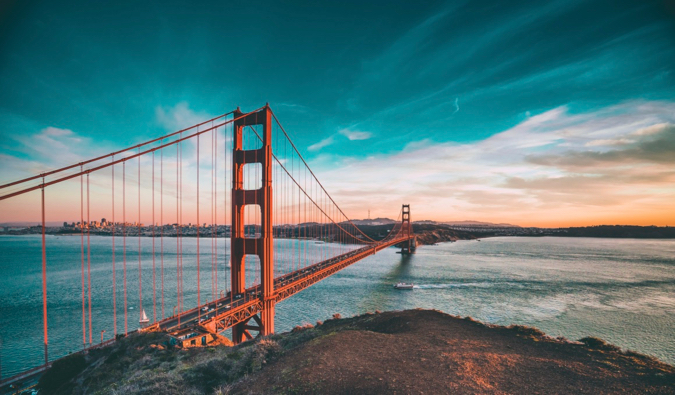
The famous Golden Gate Bridge in San Francisco, USA at sunset
Updated: 03/24/20 | March 24th, 2020

I loved visiting San Francisco from the start. It’s a city home to hippies, techies, artists, immigrants, students, and everyone in between. There’s incredible music, wold-class food for all budgets, some of the BEST Asian food in the country, parks galore, and amazing bohemian vibe to it.

With so many diverse influences, it’s no surprise that San Francisco has evolved into a world-class city that has a ton of amazing things to see and do.

Personally, I love visiting San Francisco for the food. It’s home to some of the best Asian and Mexican food in the country (as well as some incredible cafes).

But there is also much more to see here too. And just because it’s an expensive place to live doesn’t mean a visit has to break the bank either.

To help you plan your trip, here are the best 28 things to see and do in San Francisco
 

1. Take a Free Walking Tour

The first thing I do whenever I arrive in a new destination is to take a walking tour. It’s the best way to get the lay of the land, see the highlights, and ask your questions to an expert local guide. Free Tours By Foot has a few different FREE options available covering different areas of the city. (Just make sure to tip your guide)

If you want something more in-depth, there are also plenty of paid tours you can take. Take Walks is my go-to walking tour company and they offer some interesting tours around the city. If you want to really learn a lot (while having fun), book a tour with them!
 

2. Walk the Golden Gate Bridge
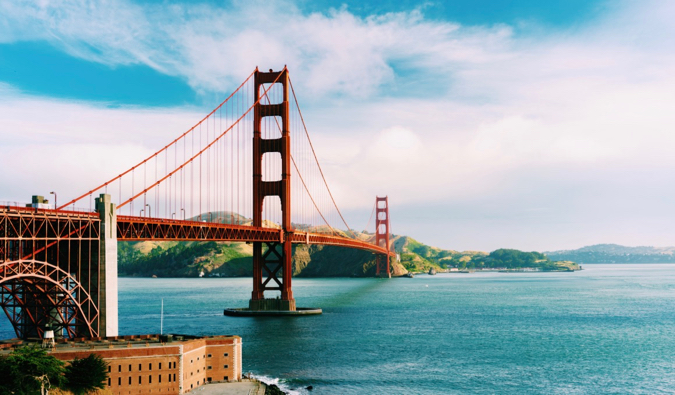
The famous Golden Gate Bridge in San Francisco, USA in the summer
There is no question that the iconic Golden Gate Bridge is one of San Francisco’s most famous landmarks. Opened in 1937, it’s arguably the most-photographed bridge in the world. At its inception, it was both the longest and the tallest suspension bridge in the world, spanning 4,200 feet (1,280m) long and standing 746 feet (227m) tall.

You can walk across the bridge (which I recommended) or just stare at it from every angle and snap your own iconic photos. If you have time, make your way to the Golden Gate National Recreation Area. It has a waterfront promenade, sweeping views of the bridge, and a few easy hiking trails.
 

3. Visit Crissy Field

This park is located near the bridge and makes for a nice follow-up. It has a beach, some restaurants, piers where you can see locals fishing, and plenty of green space to relax. It offers some sweeping views of the harbor, making it a laid-back place to come in the summer to have a picnic, lounge in the sun, and watch life go by.
 

4. See The Palace of Fine Arts

The Palace of Fine Arts is a Roman-style remnant of the 1915 Panama-Pacific International Exposition (a world’s fair held in San Francisco). The outdoor rotunda and its lagoon are another one of the city’s most photographed sights. It’s also a fun social destination where you can bring friends to play giant Jenga, cornhole, ping pong, and other games. The city often has events here.

601 Lyon Street, +1 415-608-2220, palaceoffinearts.com. Open Tuesday-Sunday from 10am-5pm. Admission is free (some events charge admission).
 

5. Wander Fisherman’s Wharf and Pier 39

The wharf was originally dominated by Italian immigrants who helped popularize the city’s fish market. To this day, you can watch fishermen at work in Fish Alley (the main street where the fishermen work). If you want to try some of the mouthwatering seafood that San Francisco is famous for, I sugged Waterbar and the Anchor Oyster Bar.

Pier 39 is touristy but it’s also a fun way to spend an hour or so. There are buskers, tacky souvenir shops, arcades, an aquarium, and tons of overpriced restaurants (so avoid eating here).
 

6. Explore Alcatraz
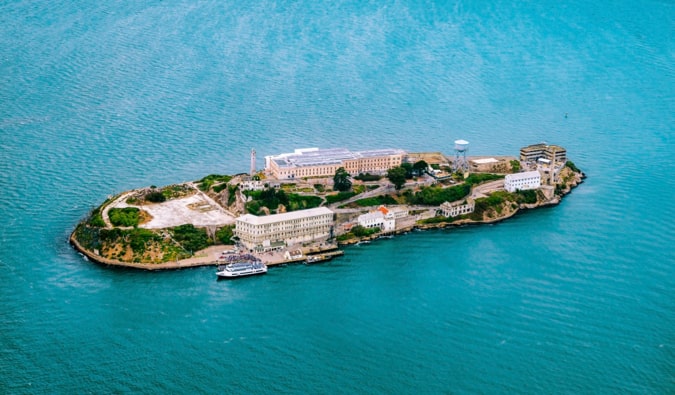
The infamous Alcatraz prison on an island off of San Francisco, USA
Alcatraz is probably the most famous (or infamous) prison in America. From 1934-1963, it housed the country’s most notorious criminals (criminals like Al Capone). In its 29 year history, not a single prisoner successfully escaped (or so they say). After its closure, it became a national landmark. Visitors can explore the island, learn about the prison and what life was like as an inmate, and tour the interior. It gets very busy in the summer so be sure to book ahead.

+1 415-981-7625, alcatrazcruises.com. Tours run daily year-round and cost $39.90 USD which includes an audio tour.
 

7. Take a Day Trip to Berkeley

Located just 20 minutes across the bay by car, Berkeley is home to music, hippies, students, and the University of California – Berkeley (30% of the city’s population go to school here). You can take a tour of the campus (self-guided or guided), hike up the Berkeley Hills, or shop on Fourth Street (the main thoroughfare). You’ll also find lots of vegan and vegetarian restaurants, street performers, and eclectic shops to browse.
 

8. Hang out in the Mission

For an amazing view of the city, head to Dolores Park in the Mission District. If you’re a history buff, don’t miss the Misión San Francisco de Asís (Mission Dolores). Founded in 1776, it’s the oldest surviving structure in the city and home to the only cemetery within city limits. It’s the structure that gives this part of town its name.

The Mission District is also a fun place to spend a night out. The district has tons of great Mexican restaurants as well as lively bars and clubs. Grab a burrito at Taqueria Cancún or Papolete, or visit one of the cocktail bars on 16th (Dalva is good).
 

9. See Lombard Street

This is the world’s windiest street. Surrounded by gardens and flowers, it’s made up of eight hairpin turns because, during the 1920s, people in San Francisco were beginning to drive around in automobiles. However, many of the city’s famous hills were too steep to navigate. The idea of using a curved street to help vehicles move downhill was embraced and the hill’s slope went from 27% to 16%. Now you can watch the cars and bikers navigate the sharp turns as tourists gawk at them.
 

10. Visit Coit Tower

Perched atop Telegraph Hill, this art deco tower was built in 1933. Standing 180-feet tall (55m), it’s home to over 25 murals and offers a panoramic view of the city. The murals here were painted in 1934 by local artists and depict life in San Francisco during the Depression. The tower became a San Francisco Designated Landmark in 1984 and was added to the National Register of Historic Places in 2008.

1 Telegraph Hill Blvd, +1 315-249-0995,sfrecpark.org/destination/telegraph-hill-pioneer-park/coit-tower. Open daily from 10am-5pm (6pm in the summer). Admission is $6 USD for city residents and $9 USD for visitors.
 

11. Eat in Chinatown

This is the biggest Chinatown in the United States (and it’s the second most famous, after New York City. Chinese immigrants first came to the West Coast in the 1850s and set up shop in San Francisco. Due to racial segregation, this neighborhood became predominantly Chinese and remained so even after segregation ended.

It’s one of the best places in the city to eat and you can find some incredible dim sum here. There are also lots of great teahouses, bars, souvenir stalls, and fortune cookie makers.

To really learn about the area, its history, and its people, take a walking tour with Take Walks. They’re my go-to walking tour company because they use expert local guides and their tours are always fun and educational.
 

12. Ride the Cable Cars
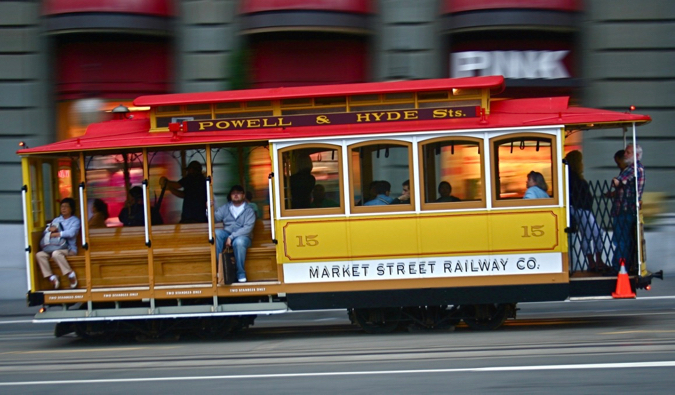
The famous streetcars of San Francisco, USA
No visit to San Francisco is complete without riding on a cable car. The cable car system in San Francisco is the last manually-operated system in the entire world. Of the 22 lines that were originally created in the 19th century, only three are still in operation. Since there is limited seating (and since they are one of the biggest tourist attractions in the city) waits can be long. Make sure you plan ahead (try to go during a weekday when there are fewer visitors). Tickets are $7 USD.
 

13. Go on a Harbor Tour

For a completely different look at the city, take an afternoon cruise of San Francisco Bay. You’ll get to see some wildlife, snap some great photos, and learn about the bay and its place in San Francisco’s history. Around 40% of California, drains into the bay and the area is home to all kinds of snakes, rays, otters, sharks, whales, sea lions, and more. A budget-friendly way to see the bay is to take the public ferries for $7.30 USD.

You can find prices and routes at sanfranciscobayferry.com.
 

14. Hang out in the Castro

San Fransico has been the de facto gay capital of the US since the 60s and 70s. The gay hub in the city is the Castro, San Francisco’s famous gay neighborhood (Harvey Milk, the first openly gay elected official in California, had his office here). The neighborhood has a number of ethnic and modern restaurants as well as a bunch that serve locally-sourced organic food. On top of that, there are a plethora of wild and fun clubs that cater to both gay and straight crowds. If you’re looking for a fun nightlife, this is the neighborhood for you.
 

15. Explore Haight-Ashbury

The birthplace of America’s counterculture, the Haight was ground zero during the summer of 1967, a.k.a. The Summer of Love. Hippies used to live here but, eventually, all the colorful Victorian homes were bought up by more well-off residents as the area gentrified. It’s now home to high-end boutiques, hip cages, and chic restaurants. That said, you can still find some record stores, dive bars, and vintage clothing stores here.

If you really want to learn more about the area’s hippy past, take the Flower Power Walking Tour. It’s just $20 USD and will walk you through the neighborhood’s vibrant and eclectic past.
 

16. Rollerskate in Church

The Church of 8 Wheels is a former church that has been converted to an old school rollerskating arena. They have DJs and live music so it’s essentially a party on wheels. Admission is $10 USD and you can rent skates for $5 USD. It’s a cheap (and unique) way to have fun and meet people. There are times for both kids and adults too and they even organize lessons for people who have never roller-skated before.

554 Fillmore St., +1 415-752-1967, churchof8wheels.com. Open Friday-Sunday. Check the website for times as there are both all-ages and adult-only events.
 

17. See Muir Woods
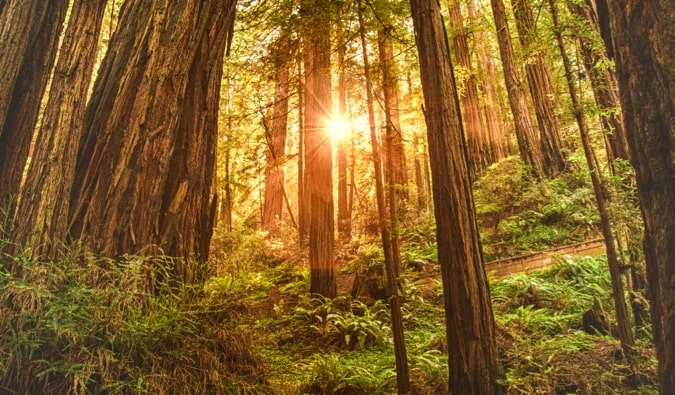
The massive trees in the serene Muir Woods in San Francisco, USA
Named after famed naturalist John Muir, it’s located just 16 miles from downtown so its an easy place to visit. The place is home to over 240 acres of towering old-growth redwood trees. While the trees here are not as big as the sequoia trees in nearby Sequoia National Park, it’s nevertheless a relaxing place to visit. There are plenty of walking trails and it’s family/kid-friendly too.
 

18. Visit the Beat Museum

Dedicated to the Beat Generation (the 1950s counter-culture), here you’ll find original manuscripts, rare books, letters, and more from authors like Jack Kerouac and Allen Ginsberg. Founded in 2003, the museums has over 1,000 pieces of memorabilia including Ginsber’s typewriter and a first edition copy of Kerouac’s novel The Town and the City. They also hold regular events so check the website to see if anything is happening during your visit.

540 Broadway, +1 800-537-6822, kerouac.com. Open daily from 10am-7pm. Admission is $8 USD.
 

19. Learn at the Exploratorium

This interactive science museum has all kinds of exhibitions covering biology, gravity, light, animation, and much more. It’s very hands-on so it’s the perfect stop for anyone traveling with kids (though there are also adult-specific exhibitions too).

Pier 15, +1 415-528-4444, exploratorium.edu. Open Tuesday–Sunday from 10am-5pm. Admission is $29.95 USD.
 

20. Hang Out in Golden Gate Park

This massive park covers over 1,000 acres, making it 20% bigger than Central Park in NYC. Inside, you’ll find a Japanese garden, an arboretum, a museum, and lots of hiking and walking trails. Walking from end to end takes the better half a day. In the summer, it’s a popular spot to picnic, go for a stroll, and soak up the sun. Even though it sees over 24 million visitors each year, it’s never too hard to find a secluded spot for yourself.
 

21. Catch a Game
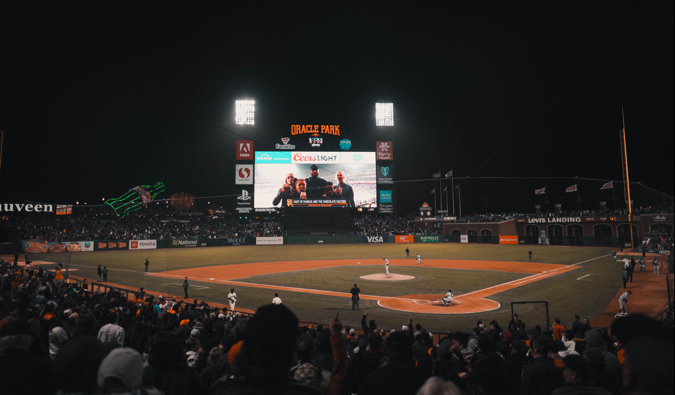
Oracle Arena in San Francisco at night full of fans
San Francisco locals love their sports teams, especially the Giants (their baseball team). If you’re in town during a game, be sure to head to Oracle Arena and take in the spectacle — it doesn’t get more American than this! The team is one of the longest-established and most successful in the league and you can get tickets for under $10 USD.
 

22. Visit the Cable Car Museum

When the cable cars launched in 1873, they were hugely popular and they changed the face of the city. To learn more and see all kinds of photos and relics from a bygone era, including some of the original cars, head to this museum. It’s not huge but it’s fun and insightful.

1201 Mason Street, +1 415-474-1887, cablecarmuseum.org. Open daily from 10am-5pm (6pm in the summer). Admission is free.
 

23. Tour Wine Country
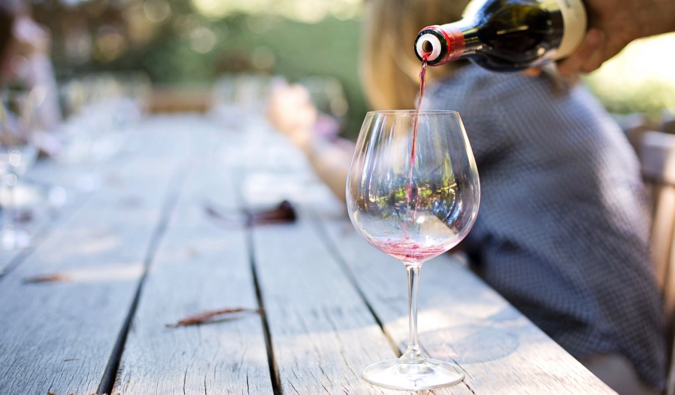
A glass of wine being poured on a table outside in Napa Valley, USA
If you love wine and have time to leave the city, visit the world-famous Napa and Sonoma wine regions. Napa is one of the world’s leading wine-producing area and every year over 3 million people come to taste their way around the region. Located just over an hour from the city by car, there are plenty of companies that organize day trips to Napa Valley (usually for between $99-150 USD per person). However, day tours are usually a bit rushed. If you have the time, rent a car and stay overnight.
 

24. Enjoy the View from Twin Peaks

For another panoramic view of the city, drive or hike up to the top of Twin Peaks. Standing 925 feet high, you’ll get a sweeping 360-degree view of the city. Come for sunset and enjoy the view. There are also lots of trails weaving around the mountains so you can hike for a couple of hours here if you wanted.
 

25. Take a Food Tour

This city is known for its food. If you want to cast a wide culinary net and try a lot of different foods, consider taking a food tour. Here are a few companies worth checking out if you’re considering:

  • Wild SF Tours – A tasty food crawl of Chinatown and Little Italy where you can try dim sum, pizza, craft cocktail-inspired boba milk tea, and cannoli. Tickets from $69.
  • Secret Food Tours – Sample the best of the Mission District, including burritos, oysters, ice cream, and more! Tickets from $79 USD.
  • TasteBud Tours – A culinary exploration of Little Italy that stops off at 7 different local restaurants. Tickets from $68.50.


26. Day Trip to Oakland

Just across the Bay Bridge from San Francisco is Oakland. It’s considered the “Brooklyn” to San Francisco’s “Manhattan.” In recent years, Oakland has developed a niche for and craft beer and specialty restaurants. There are tons of bars and breweries, and they even have their own “Ale Trail” if you want to wander the city and sample its best drinks.

You can also visit Oakland Redwood Regional Park, Lake Merritt, or catch a baseball game at Oakland Coliseum. There’s a lot you can do in Oakland and you can easily spend a day or more here!
 

27. Visit the Asian Art Museum

This is one of the most comprehensive collections of Asian art in the world. The museum houses almost 20,000 items in its collection and you can get a free guided tour to walk you through all the highlights and special exhibits that the museum has to offer. There are both modern art exhibitions as well as historical artifacts and artwork. Check the website to see what temporary exhibitions are available during your visit.

200 Larkin St., +1 415-581-3500, asianart.org. Open Tuesday-Sunday from 10am-5pm (9pm on Thursdays). Admission is $15 USD.
 

28. Take a Quirky Tour or Visit a Weird Museum

San Francisco is an eclectic city to say the least so it should come as no surprise that there are a lot of unique tours and museums here. Some of the more fun and interesting tours options are:

  • San Francisco Love Tours – Explore the city in a hand painted VW bus and learn about San Francisco’s counter-culture icons while listening to hippie music from the Summer of Love. Tours from $45 USD.
  • GoCar Tours – Whip around the city in a go kart and see the sights as you bomb down hills (including the winding Lombard Street). Tours from $120 USD.

And, for weird / offbeat museums, visit:

  • The Antique Vibrator Museum – See what sex toys from the 1800s looks like!
  • The Gregangelo Museum – This “museum” is bursting with all kinds of weird decorations, themed rooms, secret passageways, hidden rooms, and all sorts of weird art and interior design.
  • The Peephole Cinema – Watch short silent films through a tiny public peephole in the Mission District.
  • Musée Mécanique – A collection of over 300 old arcade games from the 20th century.

***

While San Francisco may be known for its high cost of living, there are tons of fun things to see and do in the city that won’t break the bank. With a little planning and creativity, you can enjoy your time in San Francisco without going over budget.

And whether you’re looking for museums, nature, food, or nightlife, this city will not disappoint.

Book Your Trip to San Francisco: Logistical Tips and Tricks

Book Your Flight
Find a cheap flight by using Skyscanner or Momondo. They are my two favorite search engines because they search websites and airlines around the globe so you always know no stone is left unturned.

Book Your Accommodation
You can book your hostel with Hostelworld. If you want to stay elsewhere, use Booking.com as they consistently return the cheapest rates for guesthouses and cheap hotels. I use them all the time. My suggested place is the The Green Tortoise. It’s the best hostel in the city. It has free breakfast, pub crawls, and dinners three times a week.

Don’t Forget Travel Insurance
Travel insurance will protect you against illness, injury, theft, and cancellations. It’s comprehensive protection in case anything goes wrong. I never go on a trip without it as I’ve had to use it many times in the past. I’ve been using World Nomads for ten years. My favorite companies that offer the best service and value are:

Looking for the Best Companies to Save Money With?
Check out my resource page for the best companies to use when you travel! I list all the ones I use to save money when I travel – and I think will help you too!

Need a Guide?
San Francisco has some really great tours on offer. For an in-depth walking tour, check out Take Walks. They use expert local guides and have a super insightful (and fun) tour through Chinatown.

For something more hands-on like a segway tour, use Fat Tire Tours. They have a few different tours around the city and are a great alternative to a standard walking tour.

Looking for More Information on Visiting San Francisco?
Check out my in-depth destination guide to San Francisco with more tips on what to see and do, costs, ways to save, and much, much more!

The post 28 Things to See and Do in San Francisco appeared first on Nomadic Matt's Travel Site.
My 5 Favorite Hostels in Mexico City

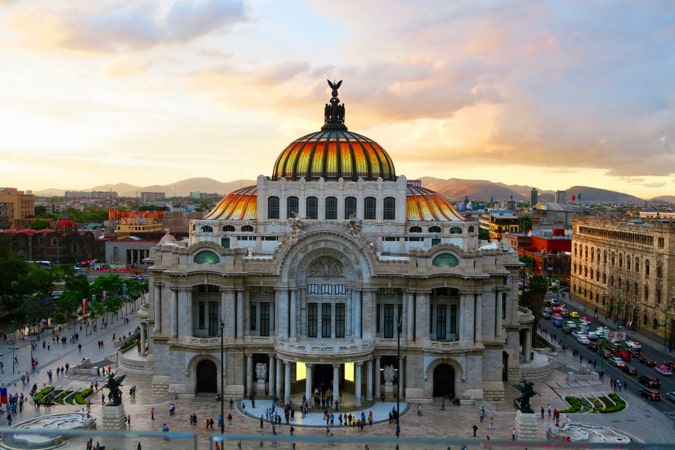
One of the many beautiful historic buildings in Mexico City
Posted: 2/8/2020 | February 8th, 2020

Over the past several years, Mexico City has become a hot spot for travelers as cheap flights and a burgeoning food scene have made this an ideal destination for travelers who wish to discover its temples, museums, and restaurants while sticking to a budget.

As such, the choices of hostels have exploded — there are now over 40. They’ve become a lot more luxurious and offer better accommodations than before.

But they are still cheap!

Beds generally cost 229-379 MXN ($12-20 USD) per night. Plus, you’ll find that many hostels offer tours, free breakfast, and common areas for meeting other travelers.

To help you decide which amazing hostel to stay at in Mexico City, here is a list of my five favorites!
 

1. Casa Pepe

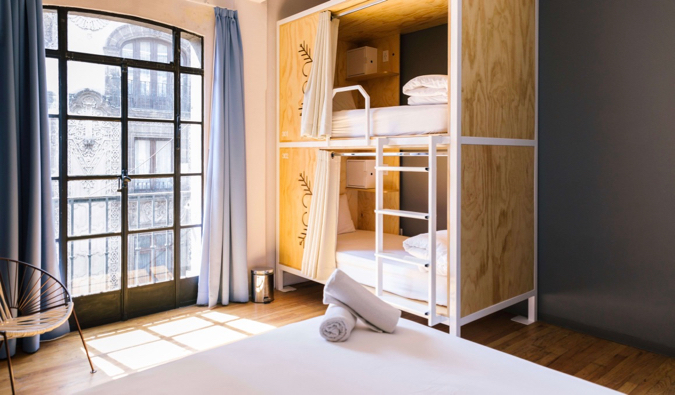
One of the beautiful dorm rooms at the Casa Pepe hostel in Mexico City
Hands-down the best hostels in the city, Casa Pepe is equal parts cultural hub and boutique hostel. It offers a plethora of activities for travelers like in-house concerts, wrestling trips, tequila tastings, traditional dishes for breakfast, and free daily walking tours in different areas of town too.

The rooms are clean and spacious and come with private lockers. The dorm beds are cubby-like and covered by a curtain, so you can have your own private space, which makes sleeping a lot easier. They also come with their own light and USB charger port. You can enjoy yoga in the morning and relax on the rooftop terrace in the evening (there’s a rooftop swimming pool too!).

If you’re looking for a social hostel that makes it easy to meet people, this is it! It’s also located in a great part of the historic center of the city, near the Metropolitan Cathedral and the Zócalo.

Beds from 379 MXN ($20 USD), privates from 1,619 MXN ($86 USD).

—> Book your stay at Casa Pepe!
 

2. Massiosare El Hostel

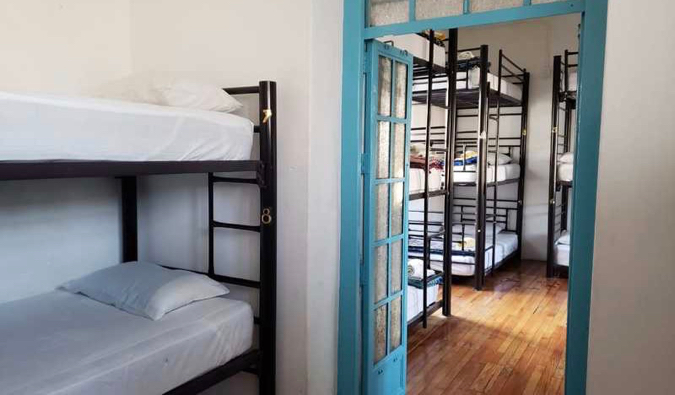
Bunk beds in the Massiosare El Hostel in Mexico City
Towering over Mexico City, Massiosare El Hostel is located in the penthouse of a beautiful historic building. There’s no elevator up to the hostel (which is on the 4th floor), though, which can be tiring, but it more than compensates with cozy dorm rooms and a super chill rooftop. The views from the roof are incredible, and it’s a fun place to relax at night and listen to music with other travelers.

There are two kitchens (one for vegetarians and one for meat eaters) as well as a free breakfast every morning as well. It’s another great social hostel, and it’s super easy to meet people here. Just make sure to bring earplugs since it’s an old building and sounds tend to carry.

Beds from 240 MXN ($12 USD), privates from 600 MXN ($31 USD).

—> Book your stay at Massiosare El Hostel!
 

3. Hostel Home

one of the dorm rooms in Hostel Home, Mexico City
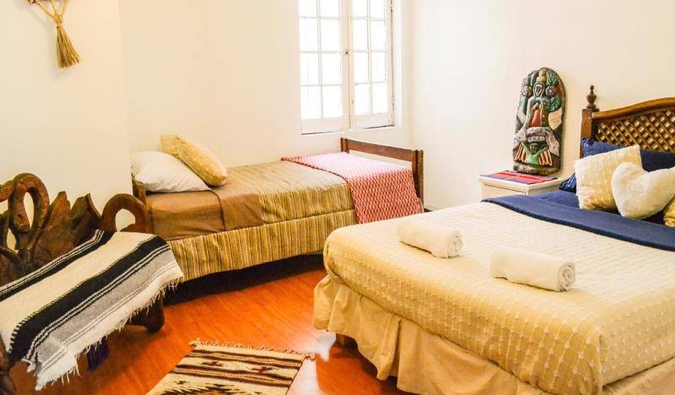
Hostel Home is Mexico City’s first hostel. Located in the Roma district, this place feels is super homey. It’s small, with colorful paintings on the walls and tons of potted plants, and offers comfortable beds, free drinking water, and good Wi-Fi.

The rooms are a little cramped, but each dorm bed has its own locker and power socket, and there’s a large common area in which to socialize in. There’s a kitchen to cook and fresh fruit and eggs are provided at breakfast. The staff are also super helpful and can provide information about the surrounding area and things to do nearby. If you want a more “old school” hostel feel, this place is it.

Beds from 300 MXN ($15 USD), privates from 747 MXN ($39 USD).

—> Book your stay at Hostel Home!
 

4. Suites DF Hostel

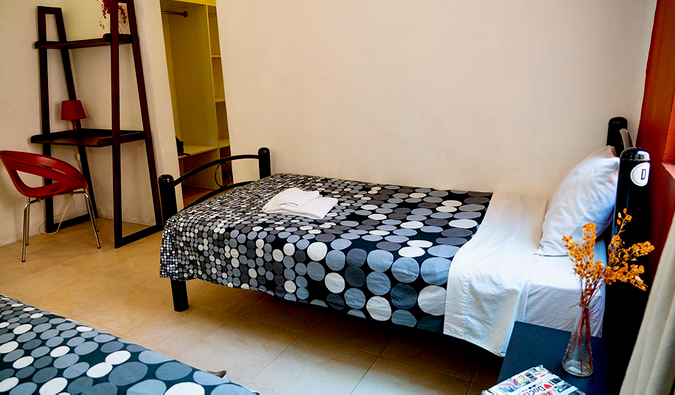
the dorm room of the Suites DF Hostel in Mexico City
Suites DF Hostel is located in the hustle and bustle of downtown near tons of bars, restaurants, and cafés — although it’s still a bit quieter than other hostels so if you want to avoid a party hostel, stay here.

Overall, the rooms are clean and simple, and the bedsheets have bright, funky designs that brighten up the place. All the dorms have en suite bathrooms, and there is a personal light and power socket for each bed. There are multiple common rooms to hang out in, a cool terrace for relaxing, and free breakfast every morning.

The hostel also offers a lot of awesome tours to see the sights and meet other people. They also arrange trips to the Teotihuacán Pyramids, the Xochimilco Canals, and lucha libre wrestling matches.

Beds from 324 MXN ($17 USD), privates from 857 MXN ($45 USD).

—> Book your stay at Suites DF Hostel!
 

5. Hostel Amigo Suites Downtown

the terrace of the Amigo Suites Inn in Mexico City
This hostel is the place to party. The rooftop terrace and bar go until 5:00 in the morning! After spending your night partying, you can soak in the sunshine in the solarium or swing on one of the hammocks.

Dorm rooms are small (only 3 or 4 beds per room). You’ll get towels, a personal locker, and an en suite bathroom. The private rooms are pretty spacious, though, with either a double bed or two single beds. There’s also a delicious free vegetarian buffet breakfast and dinner.

Beds from 229 MXN ($12 USD), privates from 650 MXN ($35 USD).

—> Book your stay at Hostel Amigo Suites Downtown!

***

Mexico City and the hostel scene here is fast becoming one of the best in the region. Whether you’re looking for a quiet place to stay or want to party the nights away, Mexico City will have a hostel for you. The prices are incredibly reasonable too, making it an affordable destination for backpackers and budget travelers alike.

Book Your Trip to Mexico City: Logistical Tips and Tricks

Book Your Flight
Find a cheap flight by using Skyscanner or Momondo. They are my two favorite search engines because they search websites and airlines around the globe so you always know no stone is left unturned.

Book Your Accommodation
You can book your hostel with Hostelworld as they have the largest inventory. If you want to stay elsewhere, use Booking.com as they consistently return the cheapest rates for guesthouses and cheap hotels.

Don’t Forget Travel Insurance
Travel insurance will protect you against illness, injury, theft, and cancellations. It’s comprehensive protection in case anything goes wrong. I never go on a trip without it as I’ve had to use it many times in the past. I’ve been using World Nomads for ten years. My favorite companies that offer the best service and value are:

Looking for the best companies to save money with?
Check out my resource page for the best companies to use when you travel! I list all the ones I use to save money when I travel – and I think will help you too!

Looking for more travel tips for Mexico City?
Check out my in-depth Mexico City travel guide for more ways to save money, costs, tips on what to see and do, suggested itineraries, reading, packing lists, and much, much more!

Photo credits: 2, 3, 4, 5, 6

The post My 5 Favorite Hostels in Mexico City appeared first on Nomadic Matt's Travel Site.
Here Lies America: An Interview With Jason Cochran

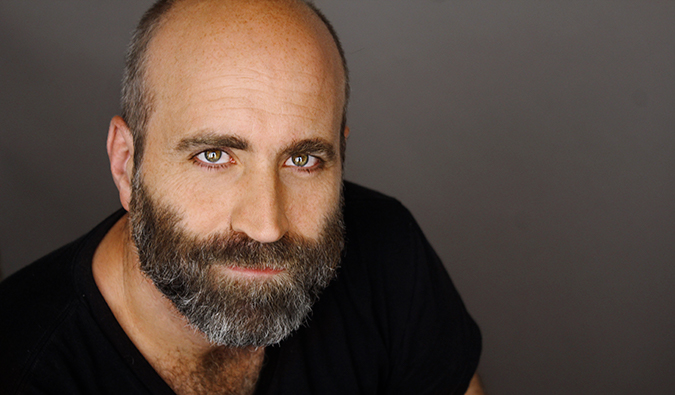
Jason Cochran
Posted: 01/27/2020 | January 27th, 2020

In 2010, I decided to spend the summer in NYC. I was two years into blogging and was making enough where I could afford a few months here. Still new to the industry, NYC was where all the legends of writing lived and I wanted to start making connections with my peers.

It was that summer I met Jason Cochran, a guidebook writer from Frommers, editor, and the man I would consider my mentor.

Though we never had any formal mentor/mentee relationship, Jason’s writing philosophy, advice, and feedback, especially on my first book, How to Travel the World on $50 a Day, has been instrumental in shaping me as a writer. Much of his philosophy has become mine and I don’t think I would have grown to where I am without him.

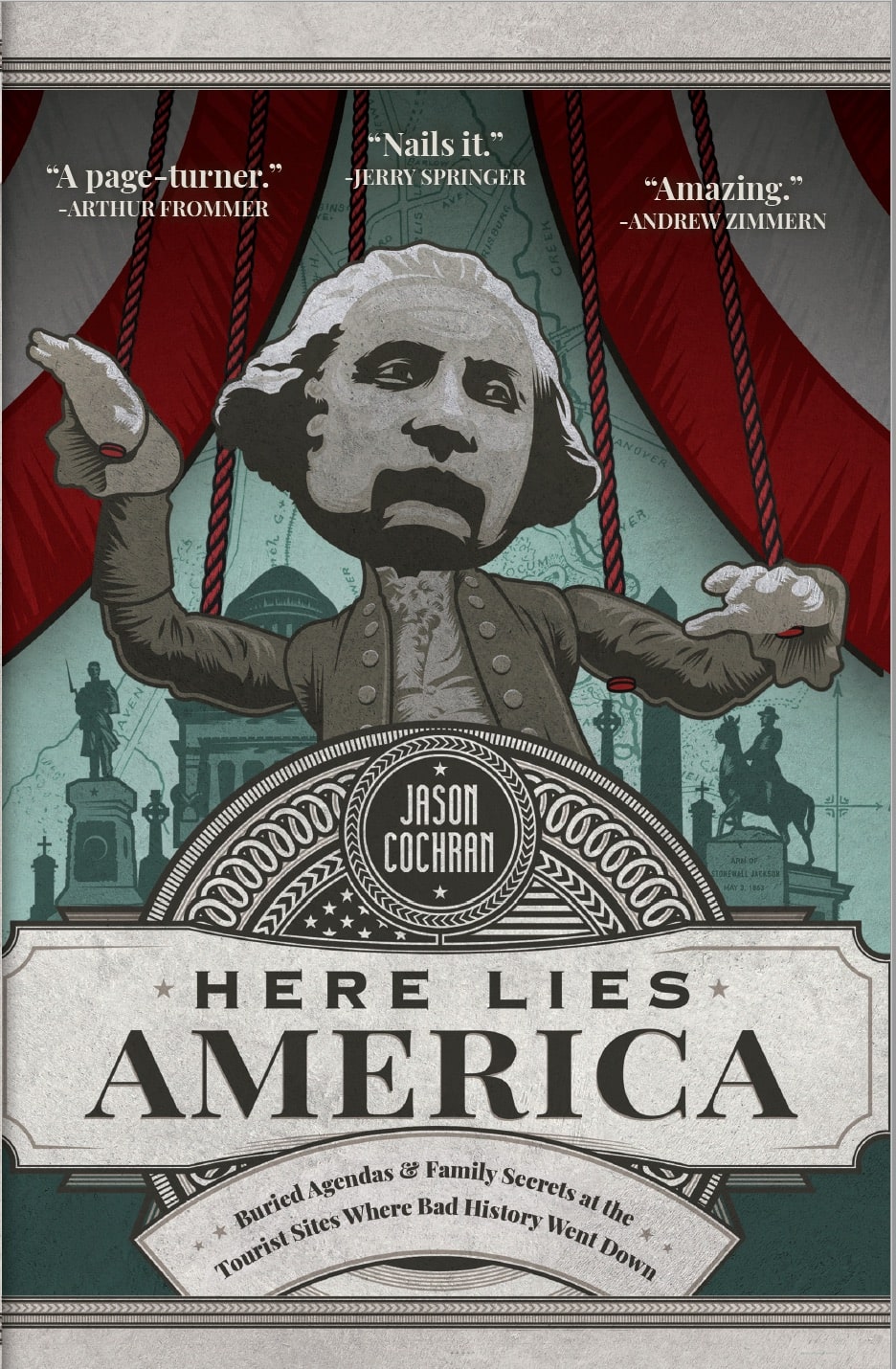
Last year, he finally published the book he’d been working on about tourism in America, called Here Lies America. (We featured it on our best books of 2019 list).

Today, we’re going to go behind the scenes of the book and talk to Jason on what does lie in America!

Nomadic Matt: Tell everyone about yourself.
Jason Cochran: I’ve been a travel writer for longer than I’ve felt like an adult. In the mid-‘90s, I kept a very early form of a travel blog on a two-year backpacking trip around the world. That blog became a career. I’ve written for more publications than I can count, including for a prime-time game show.

These days I’m the Editor-in-Chief of Frommers.com, where I also write two of its annual guidebooks, and I co-host a weekly radio show with Pauline Frommer on WABC. For me, history is always my way into a new place. In many ways, time is a form of travel, and understanding the past flexes a lot of the same intellectual muscles as understanding cultural differences.

So I have come to call myself a travel writer and a pop historian. That last term is something I just made up. Dan Rather made fun of me once for it. “Whatever that is,” he said. But it seems to fit. I like uncovering everyday history in ways that are funny, revealing, and casual, the way Bill Bryson and Sarah Vowell do.

What made you want to write this book?
Before I began researching, I just thought it would be funny. You know, sarcastic and ironic, about Americans going to graveyards and places of suffering just to buy lots of tacky souvenirs, eat ice cream, and wear dumb t-shirts. And, that’s still in there, for sure. We’re Americans and we like those things. Key chains will happen.

But that changed fast. For one, that would have become a very tired joke. It wouldn’t carry for three hundred pages. Things clicked for me early on, on the first of several cross-country research drives I took. I went to a place that I wasn’t taught about at school, and it clicked. I was at Andersonville in rural Georgia, where 13,000 out of 45,000 Civil War prisoners died in just 14 months. It was flat-out a concentration camp.

Yes, it turns out that concentration camps are as American as apple pie. The man who ran it was the only Confederate officer who was executed after the war. Southerners feared the victors would hang their leaders by the dozen, but that vengeance never materialized. Not for Jefferson Davis, not for Robert E. Lee—the guy who ran this camp poorly got the only public hanging. And he wasn’t even a born American. He was Swiss!

But that’s how important this place was at the time. Yet most of us have never even heard of it, except for a really bad low-budget movie on TNT in the ‘90s in which all the characters bellowed inspirational monologues as if they thought they were remaking Hoosiers.

So just getting my head around the full insanity of Andersonville’s existence was a big light bulb—our history is constantly undergoing whitewashing. Americans are always willfully trying to forget how violent and awful we can be to each other.

And Andersonville wasn’t even the only concentration camp in that war. There were a bunch in both the North and the South, and most of them had survival rates that were just as dismal. So that was another light bulb: There’s a story in why our society decided to preserve Andersonville but forget about a place like Chicago’s Camp Douglas, which was really just as nasty, except now it’s a high-rise housing project and there’s a Taco Bell and a frozen custard place where its gate once stood.

And did you know that the remains of 12,000 people from another Revolutionary War concentration camp are in a forgotten grave smack in the middle of Brooklyn? We think our major historic sites are sacred and that they are the pillars of our proud American story, but actually, how accurate can our sites be if they’re not even fairly chosen?

Here Lies America book coverWhat was one of the most surprising things you learned from your research?
In almost no instance was a plaque, statue, or sign placed right after the historic event in question. Most of the monuments were actually installed many decades after the event. In the case of the Civil War, most of the memorials were erected in a boom that came a half-century after the last bullet was fired.

If you really get close to the plaques and read past the poetic inscriptions, it quickly becomes clear that our most beloved historic sites aren’t sanctified with artifacts but with propaganda placed there by people who weren’t even witnesses to the event. There was a vast network of women’s clubs that would help you order a statue for your own town out of a catalog, and they commissioned European sculptors who cashed the checks but privately grumbled about the poor taste of the tacky kitsch they were installing all over America.

We’re still dealing with what they did today. It’s what Charlottesville was about. But most people don’t realize these statues weren’t put there anywhere near the time of the war, or that they were the product of an orchestrated public relations machine. By powerful women!

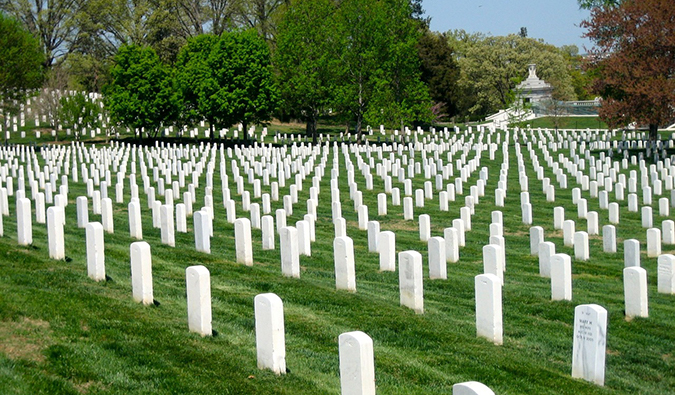
Arlington Cemetery

I wrote a line in the book: “Having a Southern heritage is like having herpes—you can forget you have it, you can deny it, but it inevitably bubbles up and requires attention.” These issues aren’t going away.

Places we think of as holy ground, like Arlington National Cemetery, often have some pretty shocking origin stories. Arlington started because some guy got pissed off at Robert E. Lee and started buying corpses in his rose garden to get back at him! That’s our hallowed national burial ground: a nasty practical joke, like the Burn Book from Mean Girls. Dig a little and you find more revolting secrets, like how the incredible number of people buried under the wrong headstone, or the time the government put the remains of a Vietnam soldier in the Tomb of the Unknowns. They pretty much knew his identity, but Ronald Reagan really wanted a TV photo op. So they sealed all the soldier’s belongings in the coffin with him so that no one would figure it out.

They eventually had to admit they’d lied and gave the soldier’s body back to his mom. But if a thing like that happens in a place like Arlington, can the rest of our supposedly sacred sites be taken at face value at all?

It goes a lot deeper. At Ford’s Theatre and the surrender house at Appomattox, the site we visit isn’t even real. They’re fakes! The original buildings are long gone but visitors are rarely told that. The tale’s moral is what’s valued, not the authenticity.

What can visiting these sites teach us about how we remember our past?
Once you realize that all historic sites have been cultivated by someone who wanted to define your understanding of it, you learn how to use critical thinking as a traveler. All it takes is asking questions. One of the most fun threads in the book kicks off when I go to Oakland, a historic but touristy cemetery in Atlanta. I spot an ignored gravestone that piqued my interest. I’d never heard of the name of the woman: Orelia Key Bell. The info desk didn’t have her listed among the notable graves. She was born around the 1860s, which was a very eventful time in Atlanta.

So I took out my phone and right there on her grave, I Googled her. I researched her whole life so I could appreciate what I was seeing. It turned out she was a major poet of her time. I stood there reading PDFs of her books at her feet. Granted, her stuff was dreary, painfully old-fashioned. I wrote that her style of writing didn’t fall out of fashion so much as it was yanked down and clubbed by Hemingway.

But reading her writing at her grave made me feel wildly connected to the past. We almost never go to old places and look deeper. We usually let things remain dead. We accept what’s on the sign or the plaque as gospel, and I’m telling you, almost nothing ever reaches us in a state of purity.

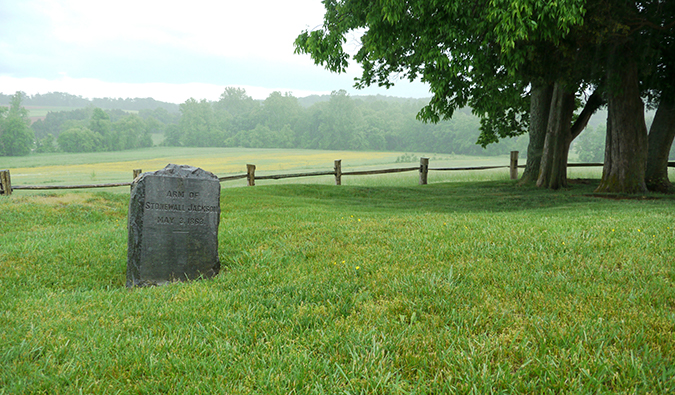
Grave of Stonewall Jackson

I figured that if I was going to probe all these strangers, I had to be fair and probe someone I knew. I decided to look into an untimely death in my own family, a great-grandfather who had died in a train wreck in 1909. That was the beginning and the end of the tale in my family: “Your great-great grandfather died in a train wreck up in Toccoa.”

But almost as soon as I started looking deeper, I discovered something truly shocking—he had been murdered. Two young Black men were accused in rural South Carolina for sabotaging his train and killing him. You’d think at least someone in my family would have known this! But no one had ever looked into it before!

Here Lies America follows their trail. Who were these guys? Why would they want to kill him? I went to where their village used to be, I started digging into court documents from their murder trial. Let me tell you, the shockers came flooding. Like, I found they may have killed him because they wanted to protect a sacred old Cherokee burial mound from destruction. There was this crazy, larger-than-life forgotten story happening in my own damn family.

My experience with that poet’s grave has a happy coda. Last week, someone told me that Orelia Key Bell and her companion are now officially part of the guided tour of Oakland. The simple act of looking deeper had revived a forgotten life and put her back on the record. That’s what visiting these sites can do—but you have to look behind the veneer, the way I do with dozens of attractions in my book. This is the essence of travel, isn’t it? Getting to a core understanding of the truth of a place.

A lot of what you wrote showed how whitewashed many of these historical sites are. How do we as travelers dig deeper to get to the real history?
Remember that pretty much everything you see at a historic site or museum was intentionally placed there or left there by someone. Ask yourself why. Ask who. And definitely ask when, because the climate of later years often twists interpretation of the past. It’s basic content analysis, really, which is something we’re really bad at in a consumer society.

Americans have it drilled into them to never question the tropes of our patriotism. If we learned about in grade school, we assume it’s a settled matter, and if you press it, you’re somehow an insurgent. Now, more than any other time in history, it’s easier than ever to call up primary sources about any era you want. If you want to go back to what our society really is, if you want to try to figure out how we wandered into the shattered shambles we’re in today, you have to be honest about the forces that created the image that, until recently, many of us believed we really were.

Gettysburg

Do you think Americans have a problem talking about their history? If so, why is that?
There’s a phrase, and I forget who said it—maybe James Baldwin?-but it goes, “Americans are better at thinking with their feelings than about them.” We go by feels, not so much by facts. We do love to cling to a tidy mythology of how free and wonderful our country always was. It reassures us. We probably need it. After all, in America, where we all come from different places, our national self-belief is our main cultural glue. So we can’t resist prettying up the horrible things we do.

But make no mistake: Violence was the foundation of power in the 1800s, and violence is still a foundation of our values and entertainment today. We have yet to come to terms with that. Our way of dealing with violence is usually to convince ourselves it’s noble.

And if we can’t make pain noble, we try to erase it. It’s why the place where McKinley was shot, in Buffalo, lies under a road now. That was intentional so that it would be forgotten by anarchists. McKinley was given no significant pilgrimage spot where he died, but right after that death, his fans paid for a monument by Burnside’s Bridge in Antietam, because as a youth, he once served coffee to soldiers.

That’s the reason: “personally and without orders served hot coffee,” it reads—it’s hilarious. That is our national mythmaking in a nutshell: Don’t pay attention to the place that raises tough questions about imperialism and economic disparity, but put up an expensive tribute to a barista.

What is the main takeaway you’d like readers to take away from your book?
You may not know where you came from as well as you think you do. And we as a society definitely haven’t asked enough questions about who shaped the information we grew up with. Americans are finally ready to hear some truth.

Jason Cochran is the author of Here Lies America: Buried Agendas and Family Secrets at the Tourist Sites Where Bad History Went Down. He’s been a writer since mid-1990s, a commentator on CBS and AOL, and works today as editor-in-chief of Frommers.com and as co-host of the Frommer Travel Show on WABC. Jason was twice awarded “Guide Book of the Year” by the Lowell Thomas Awards and the North American Travel Journalists Association.

Book Your Trip: Logistical Tips and Tricks

Book Your Flight
Find a cheap flight by using Skyscanner or Momondo. They are my two favorite search engines because they search websites and airlines around the globe so you always know no stone is left unturned.

Book Your Accommodation
You can book your hostel with Hostelworld as they have the largest inventory. If you want to stay somewhere other than a hostel, use Booking.com as they consistently return the cheapest rates for guesthouses and cheap hotels.

Don’t Forget Travel Insurance
Travel insurance will protect you against illness, injury, theft, and cancellations. It’s comprehensive protection in case anything goes wrong. I never go on a trip without it as I’ve had to use it many times in the past. I’ve been using World Nomads for ten years. My favorite companies that offer the best service and value are:

Looking for the best companies to save money with?
Check out my resource page for the best companies to use when you travel! I list all the ones I use to save money when I travel – and that will save you time and money too!

The post Here Lies America: An Interview With Jason Cochran appeared first on Nomadic Matt's Travel Site.
My 6 Favorite Hostels in Boston

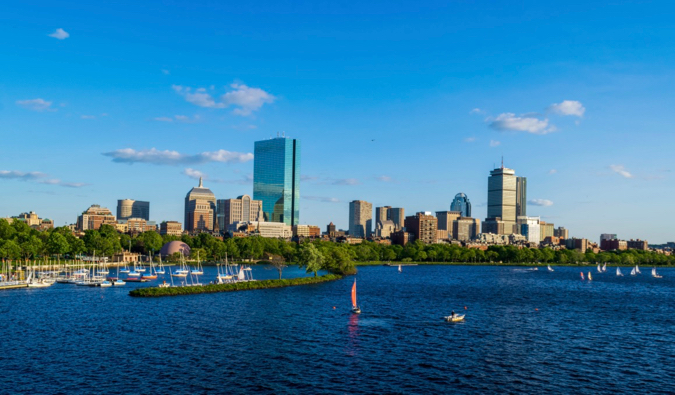
The Boston skyline as seen from the river on a bright summer day
Posted: 1/18/2020 | January 18th, 2020

With its historic colonial buildings, die-hard sports fans, and lively nightlife, Boston is one of my favorite cities in the US (and I’m not just saying that because it’s where I grew up!).

Boston has been a commercial hub since the 17th century and holds an important place in American history. After the Boston Tea Party in 1773, it became a pivotal bastion of support for the US War of Independence. Even today, the city is brimming with history and has lots to offer. It’s a must-visit destination for anyone looking to understand the roots of modern America.

Since it isn’t the most affordable destination, budget-conscious travelers and backpackers are probably going to want to save money however they can. That means finding budget-friendly accommodation.

Like most US cities, Boston doesn’t have many hostels. But the ones it does have are modern, clean, safe, and social for the most part.

To help you save money during your visit, here are the best hostels in Boston:
 

1. HI Boston

A clean and comfortable dorm room in the HI Boston hostel
HI Boston is the best hostel in town. It offers both same-sex and mixed dorms, and each bed comes equipped with a shelf, outlets, and a locker. The private rooms are modern and have more of a hotel feel to them; they also come with TVs and a bathtub (which is largely unheard of in a hostel).

The hostel also has a free continental breakfast, a kitchen to cook your own meals in, and a common room complete with TV, pool table, and a piano. They also organize free city tours and host dinners, among other activities. It’s a very social hostel.

HI Boston is located close to the Freedom Trail, the Boston Common, and Chinatown. More attractions, like the campuses of Harvard and MIT, are a only few T (subway) stops away.

Beds from $25 USD, private rooms from $101 USD a night.

—> Book your stay at HI Boston!
 

2. Boston Fenway Inn

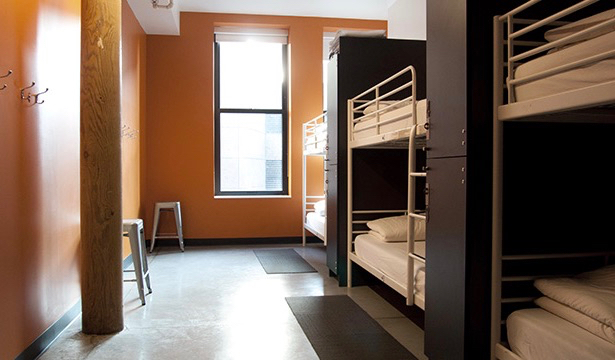
A clean and comfortable dorm room with lockers in the Boston Fenway Inn
The Boston Fenway Inn is the cheapest hostel in town. But you get what you pay for, so expect basic accommodations. The rooms here can get cold in the winter, and the windows let in a lot of sound from nearby restaurants and bars. Bathrooms aren’t plentiful, and sometimes there are lines. And if you’re not one of the first to shower, you may miss out on hot water.

Breakfast is included but is quite basic (toast and coffee) unless you wake up early and grab pastries before they’re gone. It also doesn’t have a full kitchen, and the common room is set up with tables and chairs, so it’s not super comfy.

However, the hostel is located in a prime spot near the affluent Back Bay neighborhood, a picturesque and historic neighborhood with designer boutiques, indie shops, and some of the best spots in town to eat and drink. The hostel is close to Fenway Park, the stunning Boston Public Library, the Museum of Fine arts, and the Mapparium.

Beds from $19 USD, private rooms from $54 USD a night.

—> Book your stay at Boston Fenway Inn!
 

3. FOUND Hotel Boston Common

An empty and tidy dorm room at FOUND hostel in Boston, USA
FOUND Hotel Boston Common is one of the oldest hotels in the city. Renovated in 2018, it has much more of a hotel feel to it. There isn’t a common room or kitchen, so it’s not easy to meet other travelers here, and the rooms here are small (some of the private rooms have hardly enough space for the bed).

But it’s a short walk to Boston Common and the Public Garden and has plenty of restaurants, bars, and clubs nearby. It’s also just over one block from the subway, so it’s easy to get to other attractions in town.

If you want a place that’s quiet, tidy, comfortable, and not particularly social, then book your stay here.

Beds from $36 USD, private rooms from $82 USD a night.

—> Book your stay at FOUND Hotel Boston Common!
 

4. Boston Homestel

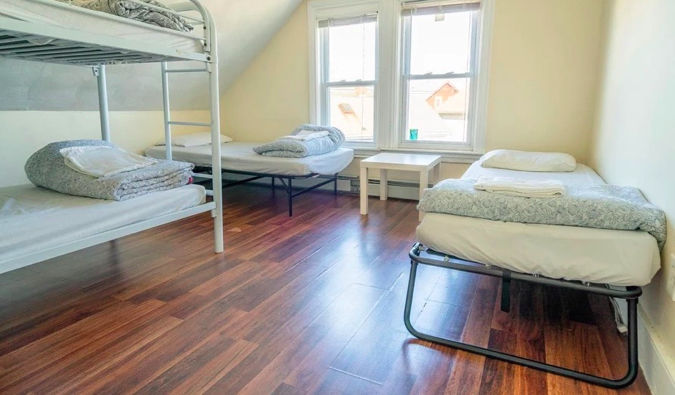
The bunk beds and single beds in a dorm room at Homestel in Boston
Located in an old house a few miles outside of the city center (but close to the JFK Library), Boston Homestel offers simple rooms and dorms. The rooms here are clean and bright but don’t have much to them. The beds aren’t the most comfortable, but the quiet location makes it easier to fall asleep than in other hostels in the heart of the city.

The hostel has a common room and a small kitchen, but not much more. It’s a quiet hostel, so don’t come to Boston Homestel expecting a party.

Beds from $37 USD, private rooms from $87 USD a night.

—> Book your stay at Boston Homestel!
 

5. Backpackers Hostel & Pub

The entrance of the Backpacker hostel just outside of Boston
Backpackers Hostel & Pub is a social hostel located in Everett, just outside the city. It’s not fancy by any means, but it has a lively atmosphere and free breakfast (which is a big plus for budget-savvy travelers). The dorms are large and not particularly fancy or comfortable (most are 8-10 beds), but the drinks are cheap, and it’s just a 10-minute drive from downtown by car (25 minutes by public transportation).

The staff are super friendly and helpful, and they also offer a free shuttle pickup service from the nearest T (subway) station (which is a 30-min walk away). They have a kitchen too, so you can easily cook your own meals here to save even more money. It’s a busy, social hostel.

Beds from $40 USD a night (private rooms not available).

—> Book your stay at Backpackers Hostel and Pub!
 

6. Liberty Fleet of Tall Ships

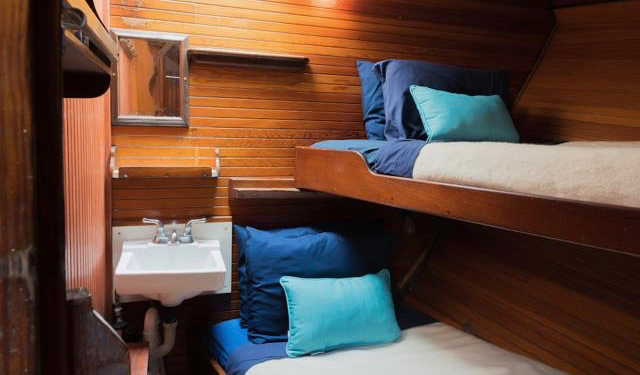
One of the cozy cabins on the Liberty Tall Ship in Boston
Available from June through September, this is easily the coolest place to stay in town: a functional sailing vessel, the Liberty Clipper. It’s a wooden three-mast ship with cozy cabins for rent. While the rooms are small, the experience is unlike anything else Boston has to offer.

Towels and linens are included, and the hot water is plentiful. There is no Wi-Fi, however, and you need to leave the ship during the day. But if you’re looking for a unique experience, this is hard to beat. It’s also a great choice for couples.

Cabins from $60 USD a night.

Book your stay at Liberty Fleet of Tall Ships!

***

Whether you’re looking to stay in the heart of town or in more quiet accommodations further afield, Boston will have something for you. While the rock-bottom budget options are limited, the facilities at the better hostels will not leave you wanting.

Even with the prevalence of Airbnb here, hostels are still the cheapest accommodation option. Just be sure to book early and you’ll be able to find a bed, meet new travelers, and save some money in the process!

Book Your Trip to Boston: Logistical Tips and Tricks

Book Your Flight
Find a cheap flight by using Skyscanner or Momondo. They are my two favorite search engines because they search websites and airlines around the globe so you always know no stone is being left unturned.

Book Your Accommodation
You can book your hostel with Hostelworld as they have the largest inventory. If you want to stay somewhere other than a hostel, use Booking.com as they consistently return the cheapest rates for guesthouses and cheap hotels.

Don’t Forget Travel Insurance
Travel insurance will protect you against illness, injury, theft, and cancellations. It’s comprehensive protection in case anything goes wrong. I never go on a trip without it, as I’ve had to use it many times in the past. I’ve been using World Nomads for ten years. My favorite companies that offer the best service and value are:

Looking for the best companies to save money with?
Check out my resource page for the best companies to use when you travel! I list all the ones I use to save money when I travel — and I think they will help you too!

Looking for more information on visiting Boston?
Check out my in-depth destination guide to Boston with more tips on what to see and do, costs, ways to save, and much, much more!

Photo credit: 2, 3, 4, 5, 6, 7

The post My 6 Favorite Hostels in Boston appeared first on Nomadic Matt's Travel Site.
My 4 Favorite Hostels in Seattle

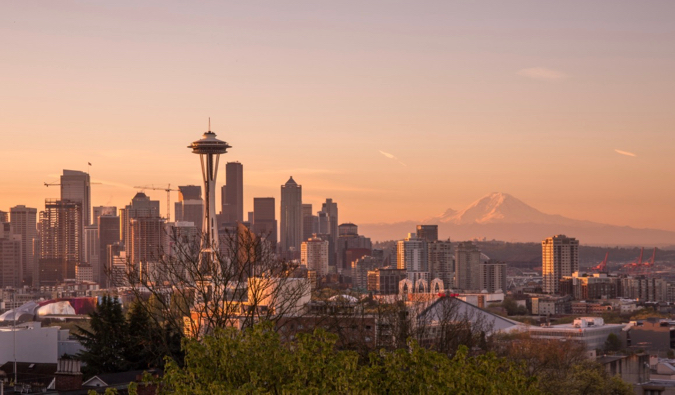
The skyline of Seattle featuring the Space Need and Mount Rainier in the background
Posted: 1/18/2020 | January 18th, 2020

Tucked away in the Pacific Northwest, Seattle is the birthplace of Starbucks and grunge music and home to some of the biggest tech companies in the world. But it’s also surrounded by stunning landscapes, with both the ocean and the mountains within easy reach. It’s known for being a laid-back, eclectic city — and an expensive one too.

Since Seattle can be a little pricey, budget travelers will likely want to stay in a hostel. Even with the prevalence of Airbnb, hostels in Seattle are still the cheapest form of accommodation — and they’re usually perfect for meeting other travelers too.

Seattle only has four hostels, and to help you plan your visit and save money, here are my reviews of each of them:
 

1. Green Tortoise Seattle Hostel

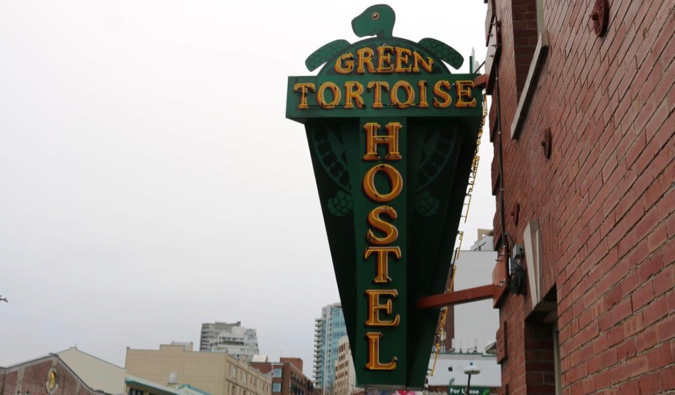
A sign outside of the Green Tortoise hostel in Seattle, Washington
This is my favorite hostel in Seattle. The dorm beds have privacy curtains, and there are enough outlets to charge everything you might bring. The rooms aren’t very large though, and the luggage storage is under the bottom bunk, so if you’re sleeping there and your bunkmate needs something, you’ll definitely hear it. You’ll also hear music and people late at night, given its central location, so bring earplugs.

That said, the bathrooms here really set this hostel apart from others: they have rainfall showerheads and heated tile floors. The hostel also provides free breakfast, complete with eggs, cereal, fruit, and bread. There is a communal kitchen and common room with foosball and other games. They also run free walking tours and pub crawls and even host weekly ice cream socials!

Green Tortoise is located across the street from the iconic Pike Place Market (as well as the first-ever Starbucks). It’s also not far from other well-known sites, like the Great Wheel and the Crocodile (a bar famous for its live music — Nirvana, Pearl Jam, and other famous bands have played here). If you want the best hostel experience in the city, stay here.

Beds from $35 USD, rooms from $98 USD a night

—> Book your stay at Green Tortoise Seattle Hostel!
 

2. HI Seattle at the American Hotel

A small dorm room at the HI Seattle hostel at the American Hotel
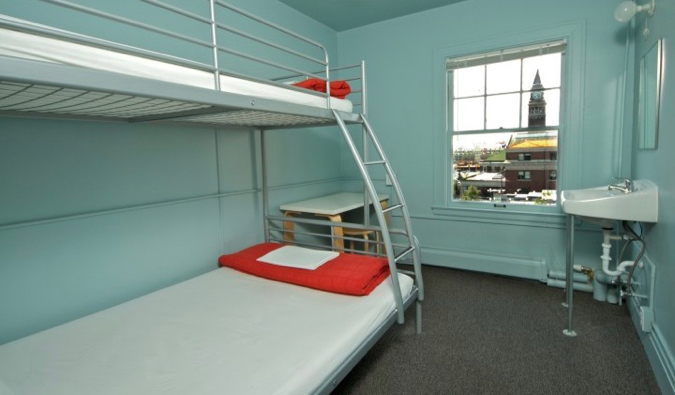
The HI Seattle at the American Hotel offers same-sex dorm rooms (there are no co-ed dorms here) with shared bathrooms, as well as private rooms, some with en suite bathrooms. Rooms here are basic, but the beds are comfortable.

The kitchen is the best thing about the hostel, as it’s large and perfect for cooking your own meals (there’s also an international grocery store a quick walk away). Free continental breakfast is included, though it’s nothing fancy.

The hostel is only minutes away from both the BoltBus and Amtrak stations, and its location in Chinatown/International District means there are lots of affordable restaurants nearby. It’s also close to historic Pioneer Square (which is home to tons of hip coffee shops, art galleries, and restaurants), as well as the Pinball Museum, Smith Tower (the oldest skyscraper in the city), the ferry terminal, and the Underground City. It’s just over a mile from Pike Place Market too.

Beds from $31 USD, rooms from $75 USD a night

—> Book your stay at HI Seattle at the American Hotel!
 

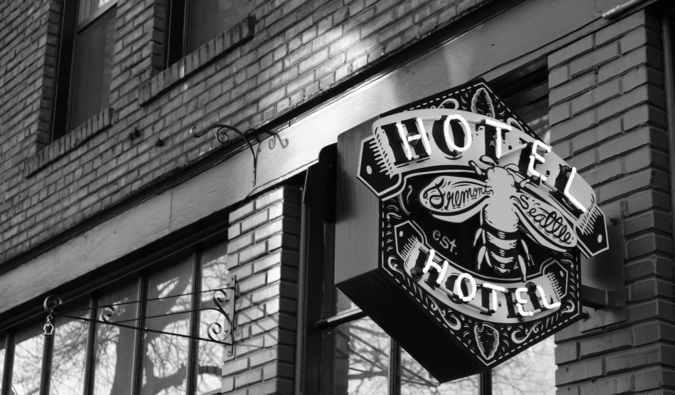
3. HotelHotel Hostel

A black and white photo of the exterior of the HotelHotel hostel in Seattle
HotelHotel Hostel offers a laid-back atmosphere and clean, comfortable dorms, which come with either en suite or shared bathrooms. It has a small kitchen and a basic free continental breakfast, both of which can help lower your budget if you plan on cooking your own meals. There is no common room though, so it’s not super easy to meet people. Also, there is a limited number of bathrooms and showers, so sometimes you may have to wait to get in.

It’s located in the quirky neighborhood of Fremont, where you’ll find the Fremont Troll, a massive statue underneath the Aurora Bridge, as well as a year-round Sunday market offering antiques, art, and food trucks.

Beds from $30 USD, rooms from $89 USD a night

—> Book your stay at HotelHotel Hostel!
 

4. City Hostel

One of the many cool locally-painted murals in City Hostel, Seattle
If you like art, you’ll love City Hostel, as its 40+ rooms were recently redesigned, renovated, and repainted by local artists. Most rooms have squeaky bunk beds, and some rooms can get loud because of the bars and clubs nearby, but everything is quite clean.

Free breakfast is included, and there’s an outdoor patio and BBQ, a communal kitchen, a fireplace, and a 20-seat theater too. It’s a great place for being social and meeting people.

City Hostel is a 10-minute walk to Pike Place Market and nearby attractions like the Space Needle, .

Beds from $30 USD, rooms from $89 USD a night

—> Book your stay at City Hostel!

***

Whether you’re looking for a quiet hostel or somewhere social and lively, Seattle has it. The prices are reasonable (relative to other US hostels), and there are tons of awesome activities and amenities to keep you entertained and help you meet other travelers.

And with Vancouver to the north and Portland to the south (each only a few hours away), Seattle is the perfect base to explore the Pacific Northwest.

Just be sure to book your stay in advance. With only four hostels in the city, rooms disappear fast. Book early, save money, and have an awesome trip!

Book Your Trip to Seattle: Logistical Tips and Tricks

Book Your Flight
Find a cheap flight by using Skyscanner or Momondo. They are my two favorite search engines, because they search websites and airlines around the globe so you always know no stone is being left unturned.

Book Your Accommodation
You can book your hostel with Hostelworld as they have the largest inventory. If you want to stay somewher eother than a hotel, use Booking.com, as they consistently return the cheapest rates for guesthouses and cheap hotels.

Don’t Forget Travel Insurance
Travel insurance will protect you against illness, injury, theft, and cancellations. It’s comprehensive protection in case anything goes wrong. I never go on a trip without it, as I’ve had to use it many times in the past. I’ve been using World Nomads for ten years. My favorite companies that offer the best service and value are:

Looking for the best companies to save money with?
Check out my resource page for the best companies to use when you travel! I list all the ones I use to save money when I travel — and I think they will help you too!

Looking for more information on visiting Seattle?
Check out my in-depth destination guide to Seattle with more tips on what to see and do, costs, ways to save, and much, much more!

Photo credit: 1, 2, 3, 4

The post My 4 Favorite Hostels in Seattle appeared first on Nomadic Matt's Travel Site.